

How to Buy Bitcoin in 2026: A Step-by-Step Guide for Beginners
By Josh Heine, Content Strategist at Simple Mining
Updated July 16, 2026Published June 3, 2024
The fastest way to buy Bitcoin is through a regulated exchange such as Coinbase or Kraken. You open an account and pass identity verification. You then link a payment method and place an order for any dollar amount. This guide shows how to buy Bitcoin in 2026 from account setup through secure storage. It also flags the fee traps and platform changes that older guides miss.
On this page · 14 sections
- What Is Bitcoin
- What You Need to Buy Bitcoin
- How to Buy Bitcoin Step by Step
- Where to Buy Bitcoin
- Payment Methods for Buying Bitcoin
- How Much Bitcoin Should You Buy
- What Buying Bitcoin Costs You
- How to Store Your Bitcoin
- Is Buying Bitcoin Safe
- Common Bitcoin Buying Mistakes
- Bitcoin Taxes
- Other Ways to Get Bitcoin
- FAQs About Buying Bitcoin
- Take the Next Step
Key Takeaways
- Regulated exchanges such as Coinbase, Kraken, Gemini, and River are the primary way for US beginners to buy Bitcoin.
- You need a government ID, a payment method, and an email address to start; a personal wallet is optional at purchase.
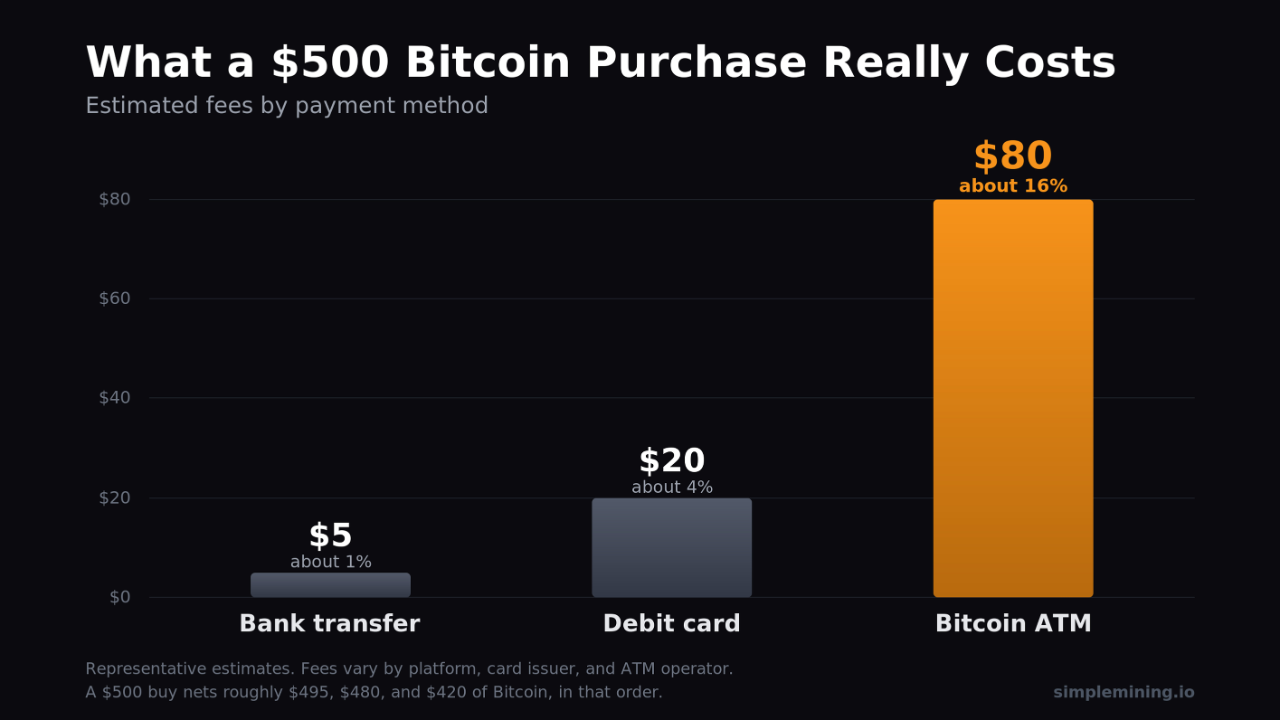
- Bank transfers carry the lowest fees while Bitcoin ATMs charge about 8% to 20% and the ATM sector contracted hard in 2026.
- Robinhood, PayPal, Venmo, and Cash App all support external Bitcoin withdrawals now, subject to verification tiers and transfer limits.
- The IRS treats Bitcoin as property, and US exchanges now report sales on Form 1099-DA.
What Is Bitcoin
Bitcoin is a decentralized digital currency with a hard cap of 21 million coins. No company or government controls it. A global network of computers verifies every transaction on a public ledger called the blockchain. That scarcity and neutrality explain why many investors treat it as a long-term asset.
What You Need to Buy Bitcoin
You need three things to open an account and one optional fourth.
- Government-issued ID. A driver's license or passport for identity checks.
- Payment method. A bank account or debit card works on every major platform.
- Secure email address. Use a unique password and turn on two-factor authentication from day one.
- Bitcoin wallet (optional). You can buy without one, but a wallet lets you take custody after purchase.
How to Buy Bitcoin Step by Step
Buying Bitcoin on an exchange takes five steps: choose an exchange, verify your account, add a payment method, place your order, and move your Bitcoin to a wallet. Most first-time buyers finish the same day.
1. Choose a Bitcoin Exchange
An exchange is a platform that matches Bitcoin buyers and sellers at a market price. Coinbase and Kraken are the largest US-licensed options for beginners. Gemini offers a similar regulated experience and River focuses on Bitcoin alone. Binance runs the largest exchange by global volume, but Binance.com does not serve US persons. The next section compares each option in more depth.
2. Create and Verify Your Account
Every regulated platform verifies identity under KYC rules before you can trade. Expect to provide:
- An email address and a strong password
- A photo of your government ID
- A selfie for facial matching
- A Social Security number for US users
Verification ranges from a few minutes to a few days.
3. Add a Payment Method
Link a bank account for the lowest fees or a debit card for instant buys. Each method carries different costs and settlement times. The payment methods section below compares them in detail.
4. Place Your Bitcoin Order
Open the buy screen and select Bitcoin (BTC). Enter a dollar amount rather than a coin amount. You never need to buy a whole coin because Bitcoin divides into eight decimals. Review the fee and the final quote before you confirm.
5. Move Your Bitcoin to a Wallet
Your coins sit in the exchange's custody by default. That works for small amounts or active trading. For anything meaningful, withdraw to a wallet you control. The storage section below explains the options.
Where to Buy Bitcoin
Regulated centralized exchanges are the best starting point for most US buyers. The other channels trade convenience or privacy for cost and risk.
Cryptocurrency Exchanges
Coinbase and Kraken lead the US market with deep liquidity and long operating histories. Gemini offers a similar regulated experience. River stands out for buyers who want a Bitcoin-only platform built around recurring purchases. All of them require full KYC verification before your first buy. Binance remains the largest exchange by global volume, but Binance.com does not serve US persons.
Brokerage Apps
Robinhood and Cash App let you buy Bitcoin inside apps you may already use. PayPal and Venmo do the same. All four now support withdrawals to external wallets, so the old claim that you cannot move coins off these apps is stale.
The real friction is verification tiers and transfer limits. Robinhood holds a new withdrawal address for 24 hours before the first transfer clears. These apps suit a first small buy while dedicated exchanges offer better pricing as your stack grows.
Bitcoin ATMs
Bitcoin ATMs are the most expensive way to buy Bitcoin and the sector contracted hard in 2026. Fees run about 8% to 20% of the purchase with a median near 16%. At that median a $500 cash purchase delivers about $420 of Bitcoin. Bitcoin Depot filed for Chapter 11 in May 2026 and took more than 9,000 machines offline.
Indiana and Tennessee banned crypto kiosks while California caps transactions at $1,000 per person per day. Scammers also target ATM users by posing as government or tech-support agents, so treat any stranger's payment instructions as a red flag. CoinFlip remains among the largest operators still running machines alongside Coinme and Byte Federal.
Peer-to-Peer Platforms
Peer-to-peer platforms match you with individual sellers instead of a company order book. Bisq is the main decentralized option and it settles trades through multisignature escrow. Hodl Hodl offers a similar non-custodial model for Bitcoin alone. Never release payment outside the platform's escrow and never move the conversation to another app. LocalBitcoins shut down in 2023 and Paxful wound down in 2025, so skip any guide that still recommends them.
P2P buying offers more privacy than an exchange. Even so, every transaction lands on a public ledger and Bitcoin remains traceable in ways many buyers underestimate.
| Platform Type | Best For | Fees | KYC Required |
|---|---|---|---|
| Exchanges | Most buyers | Low to medium | Yes |
| Brokerage apps | Users already on the app | Medium | Yes |
| Bitcoin ATMs | Cash buyers with no alternative | High, about 8% to 20% | Often, ID checks are now common |
| P2P platforms | Privacy-focused buyers | Varies by seller | Often minimal |
Payment Methods for Buying Bitcoin
Bank transfers cost the least and cash costs the most. Pick the method that matches your purchase size and patience.
Bank Transfer
ACH transfers are free or close to it on most exchanges. The trade-off is speed since deposits can take days to settle. Wires clear faster for large purchases but carry bank fees. Bank funding is the default choice when fee savings matter more than speed.
Credit and Debit Card
Debit cards buy Bitcoin in seconds for a processing fee of a few percent. Credit cards are a different story. Coinbase does not accept credit cards at all. Platforms that do accept them face a second wall because many issuers block crypto purchases outright. Issuers that allow the charge often code it as a cash advance, which adds an extra fee plus a higher interest rate with no grace period.
PayPal and Digital Wallets
PayPal and Venmo buy Bitcoin in a few taps if you already use them. Apple Pay and Google Pay speed up debit checkout on platforms that support them. Fees vary by app, so check the final quote before you confirm. Both PayPal and Venmo now allow transfers to external wallets after identity verification.
Cash
Cash purchases now run through the remaining Bitcoin ATMs or through P2P sellers. Both routes cost more than an exchange. Cash offers privacy and serves buyers without bank access, but the fee premium is steep.
How Much Bitcoin Should You Buy
You can start with almost any amount because Bitcoin divides into 100 million units called satoshis. Most exchanges accept purchases as small as $1 to $10. A sound rule is to buy only with money you can afford to lose since the price swings hard. Some buyers spread timing risk with dollar-cost averaging by purchasing a fixed dollar amount on a set schedule. Buyers weighing a larger allocation can start with the case for Bitcoin as a long-term investment.
What Buying Bitcoin Costs You
Four fee types stack on top of the Bitcoin price itself. Know all four before you judge any platform's advertised rate.
Trading Fees
Exchanges charge a percentage per trade that ranges from zero to a few percent. Rates fall as your volume grows or when you use the advanced trade screen instead of the instant-buy button.
Deposit and Withdrawal Fees
Bank deposits are free on most platforms. Card deposits carry a percentage fee, and cash-out methods carry their own charges. Check both directions before you fund an account.
Spread Costs
The spread is the gap between the price you pay and the market price. Platforms that advertise zero fees often earn their margin here instead. Compare the final quote against the live market price to see the true cost.
Network Fees
Moving Bitcoin to your own wallet costs an on-chain network fee that rises and falls with congestion. The exchange does not set this fee, and you skip it while coins stay on the platform. Bitcoin transaction fees covers how the fee market works.
How to Store Your Bitcoin
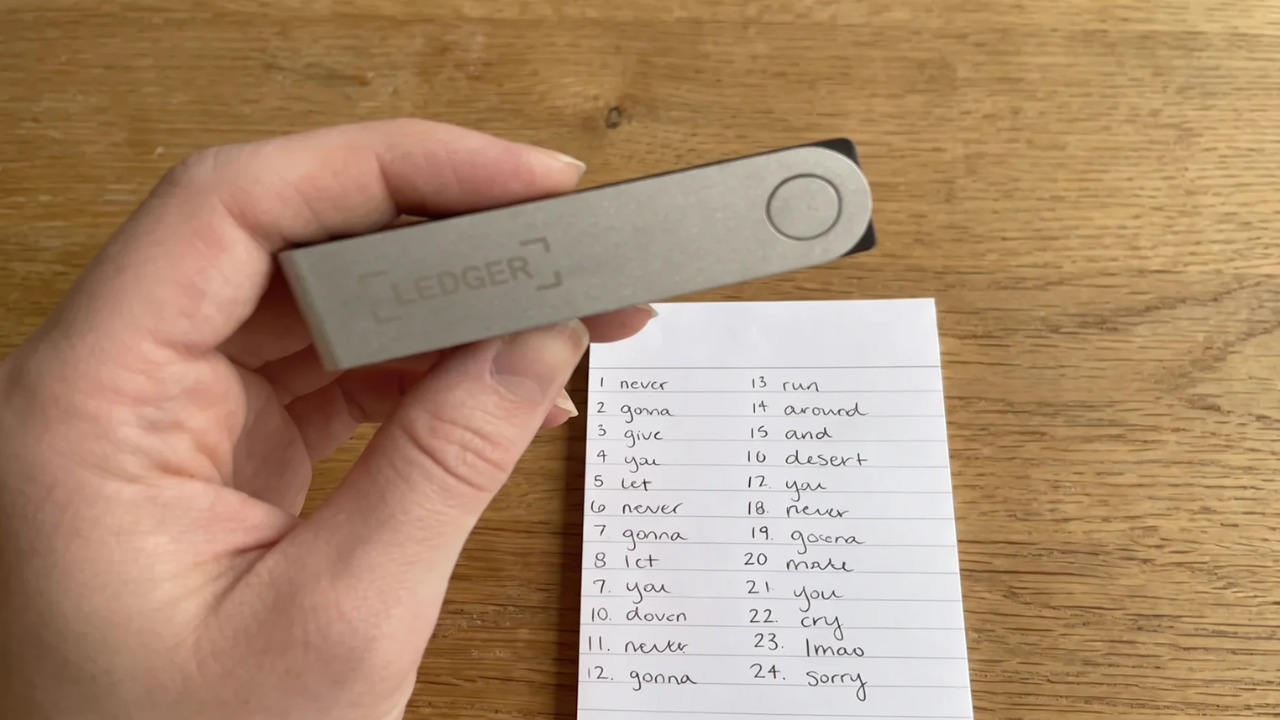
A Bitcoin wallet holds the private keys that control your coins. Hot wallets such as BlueWallet and Sparrow stay online for convenience. Cold hardware wallets like Ledger and Trezor keep keys offline for long-term holdings. Whichever you choose, write down the seed phrase and store it offline because it is the only backup.
Is Buying Bitcoin Safe
Buying Bitcoin on a regulated US exchange is safe when you handle account security and custody with care. Stick to platforms with licenses and long security track records. Turn on two-factor authentication with an authenticator app rather than SMS. No legitimate platform will ever ask for your private keys or seed phrase, so treat any such request as a scam.
Custody is the risk beginners underestimate. The 2022 FTX collapse froze customer funds overnight. Coins on an exchange depend on that company staying solvent. Move meaningful balances to a wallet you control. Volatility is the other constant, so size purchases with money you can afford to lose.
Common Bitcoin Buying Mistakes
Most beginner losses trace back to a handful of avoidable errors.
- Buying more than you can afford to lose. Bitcoin is volatile, so treat it as a high-risk position.
- Skipping security setup. Enable two-factor authentication the moment your account opens.
- Ignoring the spread. Compare the final quote to the market price instead of trusting the headline fee.
- Panic selling dips. Sharp drawdowns are normal for this asset, so decide your plan before you buy.
- Losing the seed phrase. Write it down and store it offline in more than one place.
- Falling for scams. No real platform asks for private keys or promises guaranteed returns.
- Leaving everything on the exchange. Custody risk is real, as FTX customers learned.
Bitcoin Taxes
The IRS treats Bitcoin as property, so buying alone triggers no tax while selling or spending creates a taxable event on any gain. US exchanges now report sales to the IRS on Form 1099-DA, which covers gross proceeds starting with 2025 sales and cost basis starting with 2026. Keep records of every purchase and see Bitcoin capital gains for how the math works. This is general information rather than tax advice, so consult a tax professional.
Other Ways to Get Bitcoin
Buying on an exchange is the fastest route but three alternatives suit different goals.
Bitcoin Mining
Mining earns new Bitcoin by running specialized ASIC hardware that secures the network. Machines at home bring noise and heat plus real electrical work. Hosted mining removes that operational burden. Mining versus buying Bitcoin breaks down how the two paths compare.
Simple Mining sells new ASIC miners and hosts them at its US data centers, so clients mine without touching hardware. The company operates 4+ EH/s across 150+ MW from its headquarters in Cedar Falls, Iowa. Fleet uptime runs 95%+ with in-house certified ASIC repair on site. Hosting runs $0.07 to $0.08 per kWh as a bundled hosting service fee, and precision billing means you pay only for actual uptime. How to start Bitcoin mining walks through the setup.
Bitcoin ETFs
Spot Bitcoin ETFs track the price inside a normal brokerage account. You hold fund shares rather than coins, which trades self-custody for convenience. Some investors also gain exposure through treasury companies that hold Bitcoin on their balance sheets, an approach MicroStrategy made famous.
Earning Bitcoin
Some employers offer Bitcoin payroll and several apps pay Bitcoin rewards on everyday purchases. The amounts start small but they cost nothing extra to collect.
FAQs About Buying Bitcoin
Is it worth buying $100 of Bitcoin?
A $100 purchase buys a fraction of a coin on most platforms. Whether it fits depends on your goals and risk tolerance, and fixed fees eat a larger share of small buys.
What is the minimum amount of Bitcoin you can buy?
Most exchanges accept purchases as small as $1 to $10. You never need a whole coin because Bitcoin divides into 100 million units called satoshis.
How long does it take to buy Bitcoin?
A purchase takes minutes once your account is verified and funded. Initial identity verification ranges from instant to a few days depending on the platform.
Can you buy Bitcoin without ID verification?
Most regulated exchanges require identity verification under KYC laws. Some peer-to-peer platforms allow small purchases with minimal ID, though fees and risk run higher.
Can you send Bitcoin to someone else after buying?
Yes, you can send Bitcoin to any valid wallet address. Major brokerage apps now support external withdrawals, though platforms set verification tiers and transfer limits.
What happens if you lose access to your Bitcoin wallet?
Your Bitcoin may be lost for good if you lose the wallet's recovery phrase. Write the seed phrase down and store it offline when you set up a wallet.
Take the Next Step
Buy on a platform you trust and store with keys you control. That single habit prevents most of what goes wrong in this market. If mining interests you as a second way to accumulate Bitcoin, Simple Mining offers a free 7-day trial on 235 TH/s of hashrate.