

How to Buy Bitcoin Mining Hardware: A Buyer Checklist
By Josh Heine, Content Strategist at Simple Mining
Updated June 23, 2026Published February 25, 2026
Buying Bitcoin mining hardware sounds simple until you realize the market has manufacturers, resellers, secondary dealers, and hosting providers all competing for your money. Some are legitimate. Others sell refurbished units as new or disappear after the wire clears.
This guide covers where to buy Bitcoin miners, which manufacturers to trust, how to verify a seller, and what specs matter for long-term profitability.
On this page · 12 sections
- What Is Bitcoin Mining Hardware
- Where to Buy Bitcoin Mining Machines
- Trusted Bitcoin Miner Manufacturers
- How to Spot a Trustworthy Bitcoin Mining Equipment Seller
- Bitcoin Mining Machine Price Ranges
- Key Specs to Compare Before You Buy a Bitcoin Miner
- Is Buying Bitcoin Mining Rigs Still Profitable
- New vs. Used Cryptocurrency Mining Hardware
- What Is Hosted Bitcoin Mining
- How to Start Mining After You Buy
- FAQ
- Mine Bitcoin the Simple Way
Key Takeaways
- Bitcoin mining hardware (ASIC miners) is available from manufacturers, authorized resellers, hosting providers with turnkey deployment, and secondary markets.
- Bitmain, MicroBT, and Canaan are the three dominant manufacturers. Verify any seller's registration, warranty coverage, and serial number authenticity before purchasing.
- Power efficiency (J/TH) matters more than raw hashrate for long-term profitability. The electricity rate changes everything.
- New hardware offers warranties and top-tier efficiency. Used hardware costs less but carries risk. Always inspect hashboards on used units.
- Hosted mining removes the operational burden. You own the hardware while a professional facility handles power, cooling, repairs, and monitoring.
What Is Bitcoin Mining Hardware
Bitcoin mining hardware is a specialized machine built for one purpose: securing the Bitcoin network in exchange for block rewards. The industry standard is called an ASIC miner (Application-Specific Integrated Circuit). Unlike a regular computer or GPU rig, an ASIC does one thing with maximum efficiency.
Two specs define every ASIC. Hashrate measures computational power in terahashes per second (TH/s). Power efficiency measures electricity consumption in joules per terahash (J/TH). A machine with high hashrate but poor efficiency can cost more to run than it earns. The best Bitcoin mining hardware balances raw power with low operating cost.
Where to Buy Bitcoin Mining Machines
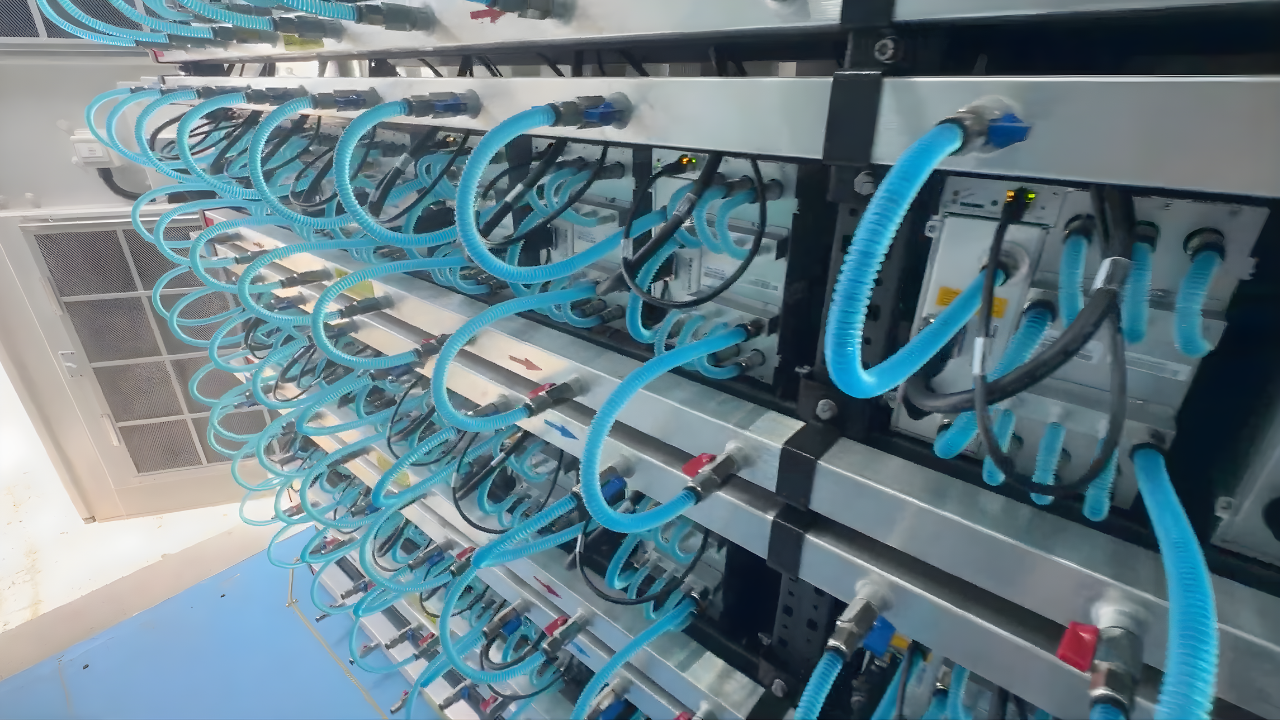
There are four main channels for purchasing Bitcoin mining equipment. Each comes with trade-offs in price, convenience, warranty coverage, and risk.
Direct From Manufacturers
You can purchase miners from Bitmain, MicroBT, or Canaan. The main benefits are guaranteed authentic hardware and a full manufacturer warranty.
The drawbacks are real. Lead times can stretch 4–12 weeks for new-generation models, depending on demand and supply chain factors. Minimum order quantities sometimes apply. Hosting is never included. You handle deployment on your own.
Authorized Resellers and Dealers
Authorized resellers purchase hardware wholesale from manufacturers and resell it to the public. This channel offers faster availability and the ability to buy single units.
The key step is verification. Confirm the seller is an authorized partner of the manufacturer before you send money. This protects you from counterfeit products and keeps your warranty valid.
Hosting Providers With Miner Sales
This is the turnkey model. You buy a Bitcoin miner and the hosting provider deploys it in their professional facility. No infrastructure buildout. No complex setup. Access to maintenance from day one.
For first-time miners who want a hands-off operation, this path makes the most sense. You purchase the hardware and it starts hashing within days. Simple Mining offers this integrated service with immediate deployment at its Iowa data centers.
Secondary Markets and Used Equipment
You can buy used BTC miners from online marketplaces or other miners. This route carries real risk: no warranty, unknown component history, and higher potential for scams.
We see failed hashboards on used machines at our repair facility every week. They are the most expensive component to replace. For experienced miners hunting specific older models with the skills to handle repairs, used equipment can work. For everyone else, the risk outweighs the savings.
Trusted Bitcoin Miner Manufacturers
Three companies produce the vast majority of legitimate ASIC miners on the market.
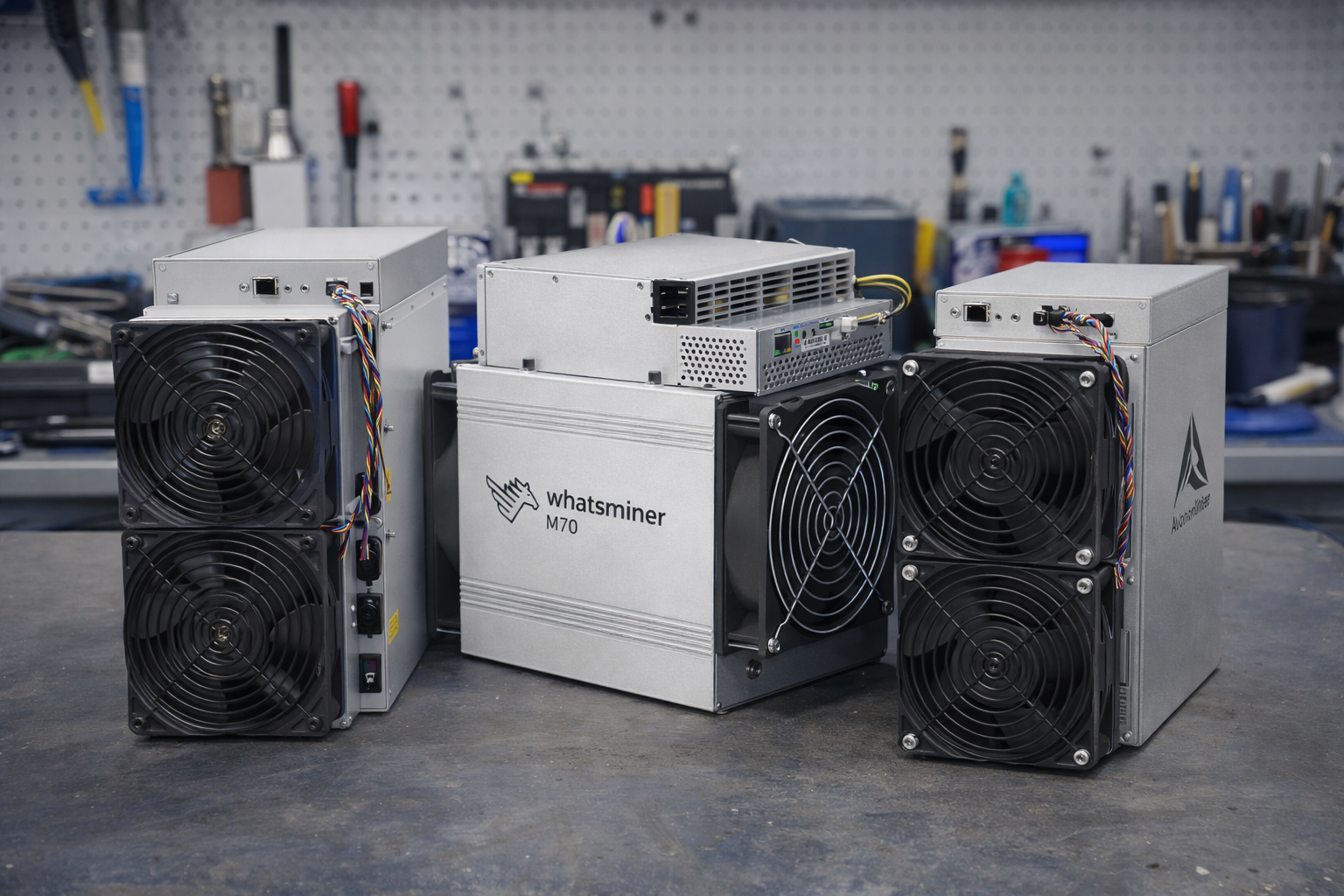
Bitmain Antminer
Bitmain is the largest ASIC manufacturer. Its Antminer S-series (including the S21 and S23 lines) is the industry standard. Bitmain hardware benefits from widespread availability and excellent parts support.
MicroBT Whatsminer
MicroBT is the second-largest manufacturer. The Whatsminer M-series (M60 and M70 lines) earns praise for reliability and power efficiency. Many operators consider MicroBT machines the most durable in the industry.
Canaan AvalonMiner
Canaan pioneered commercial ASIC mining. The AvalonMiner series offers competitive pricing and solid performance. It is a strong option for cost-conscious buyers who want a proven brand.
| Manufacturer | Popular Models | Key Strength |
|---|---|---|
| Bitmain | Antminer S21, S23 | Widest availability, parts support |
| MicroBT | Whatsminer M60, M70 | Reliability, efficiency |
| Canaan | AvalonMiner A15, A16 | Pioneer brand, competitive pricing |
How to Spot a Trustworthy Bitcoin Mining Equipment Seller
A trustworthy seller has a verified business, transparent warranty terms, authentic hardware with traceable serial numbers, and responsive support. Verify these trust signals before you send any money.
Verify Business Registration and Reviews
Check that the seller is a registered business with a physical address. Look for third-party reviews on Trustpilot and Google. A long track record of verified sales and a positive reputation in the mining community are strong indicators.
Confirm Warranty and Protection Plans
Ask about warranty length and what it covers. The critical components are:
- Hashboards: The most expensive part to replace
- Power supply unit (PSU): Converts electricity for the miner
- Fans: Essential for cooling
- Control boards: The miner's "brain"
Reputable sellers offer protection plans that extend beyond the standard manufacturer warranty. Simple Mining includes a free 12 month protection plan with every hosted unit.
Check for Authentic Parts and Hardware
Counterfeit and refurbished units get sold as new. Ask the seller for the miner's serial number. You can verify authenticity and manufacturing date with the manufacturer's database. If a deal looks too good to be true, it is.
Evaluate Customer Support and Communication
Test a seller's responsiveness before you buy. Look for companies with direct support lines (phone or live chat) rather than a generic email form. Good support is essential for future repairs and troubleshooting.
Buyer Checklist:
- Seller has a physical address and business registration
- Third-party reviews confirm reputation
- Warranty covers hashboards, PSU, fans, and control boards
- Serial numbers can be verified with the manufacturer
- Support responds within 24 hours
- Protection plan or repair coverage is available
Bitcoin Mining Machine Price Ranges
Bitcoin mining machine prices range from under $1,000 for entry-level or used units to $15,000+ for high-performance current-generation ASICs. Your budget should match your goals and your electricity cost.
Entry-Level BTC Miners
Entry-level units have lower hashrate and older efficiency ratings. They work for learning the basics or small-scale operations. The upfront cost is low but the per-hash operating cost is higher.
Mid-Tier Crypto Mining Machines
Mid-tier miners balance hashrate and efficiency. They are the most common choice for individual miners and small operations. This is where most buyers find the best value for the dollar.
High-Performance ASIC Miners
High-performance units feature the highest hashrate and the best J/TH efficiency. The upfront cost is steep. The long-term profitability potential is the strongest because operating costs per hash are the lowest. For a deeper comparison of which ASIC to purchase, model your specific electricity rate and expected hold period.
Key Specs to Compare Before You Buy a Bitcoin Miner
Focus on three specs when comparing mining rigs. Everything else is secondary.
Hashrate in TH/s
Hashrate is computational power measured in terahashes per second (TH/s). A higher hashrate means more attempts to solve the next block per second. More attempts increase your share of mining pool rewards.
Current top-tier machines operate at 300–860 TH/s or higher. A few years ago 100–200 TH/s was competitive. The industry moves fast.
Power Efficiency in J/TH
Power efficiency tells you how much electricity the miner consumes to produce one terahash. It is measured in joules per terahash (J/TH). Lower is better.
The difference between 20 J/TH and 10 J/TH can mean thousands of dollars in annual electricity costs. For long-term profitability, efficiency matters more than raw hashrate. This is the spec that separates profitable operations from unprofitable ones.
Noise and Cooling Requirements
Bitcoin miners generate significant heat and noise. A single ASIC runs at 75+ dB around the clock, and the data center noise levels behind that figure are the spec buyers underestimate most. Proper cooling requires good ventilation and controlled ambient temperature.
Most residential settings are not suitable without major modifications. This is one reason many buyers choose professional hosting.
Is Buying Bitcoin Mining Rigs Still Profitable
Profitability depends on four variables: your electricity cost, hardware efficiency (J/TH), the Bitcoin price, and network difficulty.
There is no universal answer. A miner running at $0.07/kWh in a professional facility has different economics than the same machine at $0.12/kWh in a garage. The electricity rate changes everything.
Use a mining calculator to model scenarios with your specific inputs. Simple Mining's Bitcoin Mining Calculator factors in hashrate, power consumption, and current market conditions. Hosted mining can improve profitability by cutting infrastructure costs and providing access to institutional electricity rates.
New vs. Used Cryptocurrency Mining Hardware
| Factor | New Mining Rigs | Used Mining Rigs |
|---|---|---|
| Warranty | Full manufacturer coverage | Usually none |
| Efficiency | Latest generation, best J/TH | May be outdated |
| Risk | Low: verified condition | Higher: unknown wear |
| Availability | May have lead times | Immediate if in stock |
| Price | Higher upfront | Lower upfront |
New rigs are ideal for buyers who prioritize reliability, efficiency, and warranty coverage. Used rigs can work for experienced miners on a budget who accept higher risk.
If you buy used, inspect the hashboards first. They are the most expensive component to replace. Factor repair costs into your true acquisition price. A $2,000 "deal" that needs $800 in hashboard work is a $2,800 machine.
What Is Hosted Bitcoin Mining
Hosted mining (also called colocation) is a service where you own the hardware and a hosting provider operates it in a specialized facility. It connects the act of buying hardware to running it without the operational burden.
The benefits include:
- Professional setup: No electrical work or infrastructure buildout
- Low electricity rates: Industrial power costs less than residential
- 24/7 monitoring and maintenance: Issues get addressed before they cost you money
- No noise or heat at home: Machines run in purpose-built facilities
For investors who want Bitcoin exposure through mining but do not want to become data center operators, hosting is the most practical path. Learn how cloud mining compares to hosted mining to understand the ownership difference.
How to Start Mining After You Buy
Three steps take you from purchasing hardware to earning Bitcoin.
1. Select a Mining Pool
Solo mining is impractical for individual operators. The network hashrate is too large for a single machine to find blocks with any reliability. A mining pool combines hashrate from thousands of miners. Rewards split proportional to contributed work.
When choosing a pool, consider the fee structure (1–2% is typical), the payout method (FPPS for consistent income or PPLNS for higher long-term return potential), and the pool's reputation.
2. Deploy Your Hardware or Choose Hosting
Self-hosting requires a proper 240V electrical setup, adequate cooling, ventilation, and a stable internet connection. You configure the firmware and point the miner to your pool.
Professional hosting removes the entire operational burden. You purchase the hardware. The hosting provider deploys it. You monitor performance through a dashboard.
3. Monitor Your Hashrate and Earnings
Track performance through your mining pool's dashboard or your hosting provider's monitoring interface. Watch for drops in hashrate. A sudden decline can signal a hardware issue or connectivity problem.
Good hosting providers offer real-time monitoring. Simple Mining's dashboard shows hashrate, uptime, and earnings in one place.
FAQ
Can you finance Bitcoin mining hardware purchases?
Some sellers and hosting providers offer payment plans. Terms vary. Always verify the interest rate and total cost before committing. A miner bought on a payment plan that costs 20% more over 12 months changes the break-even math.
How long does shipping take for crypto mining equipment?
Shipping ranges from a few days (in-stock domestic inventory) to several weeks (direct manufacturer orders from overseas). If time-to-hash matters, buying from a hosting provider with inventory on hand is the fastest route.
What payment methods do Bitcoin mining equipment sellers accept?
Most sellers accept wire transfers, credit cards, and cryptocurrency. Policies vary. Some offer discounts for crypto or wire payments. Verify accepted methods before you are ready to purchase.
How do you verify a cryptocurrency miner machine is authentic?
Check the serial number against the manufacturer's database. Inspect packaging for signs of tampering. Purchase from authorized dealers or resellers with verified reviews. If the price is far below market rate, assume something is wrong.
Is it legal to own and operate a Bitcoin miner machine?
In most countries including the United States, owning and operating a Bitcoin miner is legal. Local regulations on electricity usage, noise levels, and zoning may apply. Check the rules in your jurisdiction before setting up hardware at home.
Mine Bitcoin the Simple Way
For first-time buyers who want a trusted path from purchase to production, Simple Mining offers a complete solution. We sell a curated selection of top-performing Bitcoin miners paired with integrated hosting for immediate deployment.
Every miner purchase includes a free 12-month protection plan. Our U.S.-based repair facility handles fast turnarounds with on-site technicians. You monitor your hardware through a real-time dashboard.
95% average uptime. Precision billing. Direct support.
Try it free for 7 days with 235 TH/s of hashrate. No obligation.