

Top Benefits of Bitcoin Miner Hosting
By Josh Heine, Content Strategist at Simple Mining
Updated June 23, 2026Published February 9, 2026
Bitcoin miner hosting lets you run ASIC hardware in a professional facility instead of your garage, basement, or spare room. The hosting provider supplies cheap power, proper cooling, and 24/7 monitoring. You keep full ownership of the machine and the bitcoin it produces.
This matters now because mining profitability depends on three variables you can control: electricity cost, uptime, and maintenance speed. Professional hosting improves all three. Home setups struggle with all three.
The key takeaway: if you want mining exposure without operational headaches, hosted mining is the most practical path for most investors.
Key Takeaways
- Home mining often struggles because of relatively high residential power rates (commonly around $0.12–$0.20/kWh in many U.S. markets), plus poor cooling and unplanned downtime.
- Professional bitcoin hosting can reduce effective power costs to roughly $0.065–$0.08/kWh in competitive markets and commonly targets uptime above 95%, depending on the facility and contract.
- Hosted mining beats cloud mining on transparency and ownership while avoiding DIY operational headaches.
- Evaluate hosts on all-in rates, uptime data, repair capabilities, contract flexibility, and billing clarity.
- Simple Mining adds 12 months of repair coverage, pause periods during bear markets, and precision billing for actual uptime.
Why Does Hosted Mining Make Sense?
Hosted mining makes sense because it solves the three problems that kill home operations: high electricity costs, poor cooling, and unplanned downtime.
Most people who try home mining discover the same painful lessons. The electric bill spikes. The garage hits 110°F. The circuit breaker trips at 2 a.m. The machine goes offline for days before anyone notices.
Professional hosting eliminates these problems by design.
Lower Electricity Costs
Electricity is the single largest expense in bitcoin mining. Residential rates in the U.S. range from $0.12 to $0.20 per kWh. At those prices, mining margins disappear fast.
Hosting facilities typically negotiate industrial or wholesale power contracts. Simple Mining’s current all-in rates are approximately $0.065–$0.08/kWh, depending on your total capacity:
| Tier | Capacity | All-In Rate |
|---|---|---|
| Starter | 0–499 kW | $0.08/kWh |
| Premium | 500–999 kW | $0.075/kWh |
| Enterprise | 1,000+ kW | $0.07/kWh |
That difference compounds. The Antminer S21 XP (270 TH/s) draws about 3,645 W. At a typical residential rate of $0.15/kWh, that is about $394 per 30-day month in electricity. At $0.075/kWh, that is about $197 per 30-day month. That saves roughly $197 per month, or about $2,360 per year, assuming similar uptime.
Industrial-Grade Infrastructure
ASIC miners generate serious heat. A single S21 XP (270 TH/s) dumps over 12,000 BTUs per hour into whatever room contains it. Home HVAC systems aren't built for this load.
Professional facilities solve the cooling problem with purpose-built infrastructure:
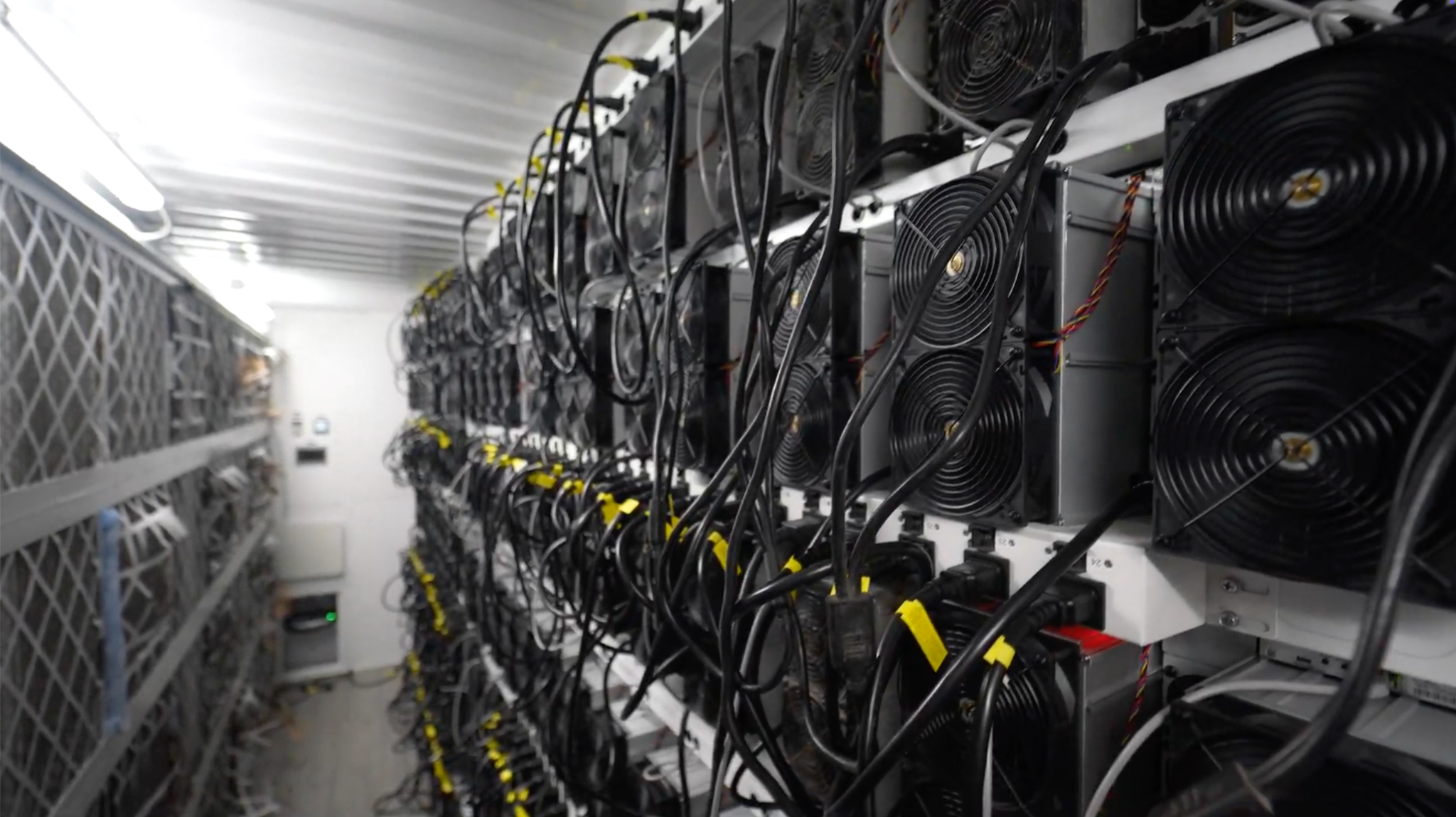
- High-volume airflow systems designed for continuous operation
- Clean, filtered intake air that prevents dust buildup on hash boards
- Stable grid connections with backup power options
- Climate advantages (Simple Mining's Iowa facilities benefit from cool Midwest temperatures)
The result is fewer thermal shutdowns and longer hardware life. Simple Mining maintains 95%+ average uptime across its fleet. Most home setups struggle to hit 80%.
Built-In Downside Protection
Good hosting contracts include features that protect you when market conditions turn ugly:
Pause periods: Power off your miners during unprofitable stretches so you stop paying for power while paused. This matters during bear markets when hashprice, the expected value of 1 TH/s of hashing power per day, drops below your breakeven.
Precision billing: Pay only for actual uptime. If your machine goes down for maintenance, that downtime gets credited according to your hosting agreement.
Flexible terms: Simple Mining offers 12-month contracts with 30-day exit notice. No multi-year lock-ins that trap capital.
How Much Does ASIC Hosting Cost?
Professional ASIC hosting typically falls in the $0.065 to $0.09 per kWh range depending on scale, location, and included services.
The "all-in" rate matters more than the base power rate. Some hosts quote cheap power but add separate fees for monitoring, security, or support. Others bill on wall-draw power (actual consumption) rather than nameplate power (manufacturer spec).
Simple Mining's all-in rates include power, monitoring, security, and standard support. Billing is based on nameplate power rather than wall draw. Since machines typically pull 2–5% above nameplate under optimal cooling, this creates an effective discount built into every invoice.
For an Antminer S21 XP (270 TH/s) drawing 3,645 W, running 24/7 for a 30-day month:
- Monthly power consumption: ~2,624 kWh
- Monthly hosting cost at $0.075/kWh: ~$197
- Effective hourly cost: ~$0.27
Compare that to the same machine at home paying $0.15/kWh residential: ~$394/month (~$0.55/hour). The hosting advantage is clear.
How Does Hosted Mining Compare to Cloud Mining and DIY?
Hosted mining gives you ownership and transparency that cloud mining lacks, plus the uptime and cost advantages that DIY setups can't match.
| Factor | DIY / Home Mining | Hosted Mining | Cloud Mining |
|---|---|---|---|
| Hardware ownership | Yes | Yes | No |
| Power cost | $0.12–$0.20/kWh | $0.065–$0.09/kWh | Hidden in contract |
| Uptime | 70–85% typical | 95–98% typical | Unknown |
| Cooling burden | On you | On host | N/A |
| Repair speed | Ship to manufacturer | On-site (days) | N/A |
| Transparency | Full | Full | Limited |
| Scam risk | Low | Low | High |
Cloud mining has a long history of opacity and outright fraud. Major industry overviews note that many cloud mining contracts obscure fees, overstate expected returns, or have disappeared with customer funds in the past.
Hosted mining occupies the middle ground. You own the hardware. You control which mining pool receives your hashrate. You see real-time performance data. But someone else handles the operational headaches.
How Do You Choose a Bitcoin Miner Hosting Provider?
Evaluate a hosting provider on five factors: all-in power rate, uptime track record, repair capabilities, contract flexibility, and billing transparency.
Use this checklist before signing any hosting agreement:
☐ All-in rate clarity
- Is the quoted rate truly all-in, or are there add-on fees?
- Is billing based on nameplate or wall-draw power?
☐ Uptime documentation
- Can they show historical uptime data?
- What's their average across the fleet?
☐ Repair capabilities
- Do they have on-site technicians or ship machines elsewhere?
- What's included vs. billed separately?
☐ Contract terms
- What's the minimum commitment?
- What happens if they raise rates?
- Can you exit without penalty?
☐ Billing transparency
- Do you get itemized invoices?
- Is downtime automatically credited?
Red flags include vague rate structures, no uptime data, long lock-in periods, and slow communication during the sales process. If they're hard to reach before you sign, they'll be harder to reach after.
What Happens If My Miner Breaks Down?
At a quality hosting facility, on-site technicians diagnose and repair your machine within days instead of the weeks required for manufacturer RMA.
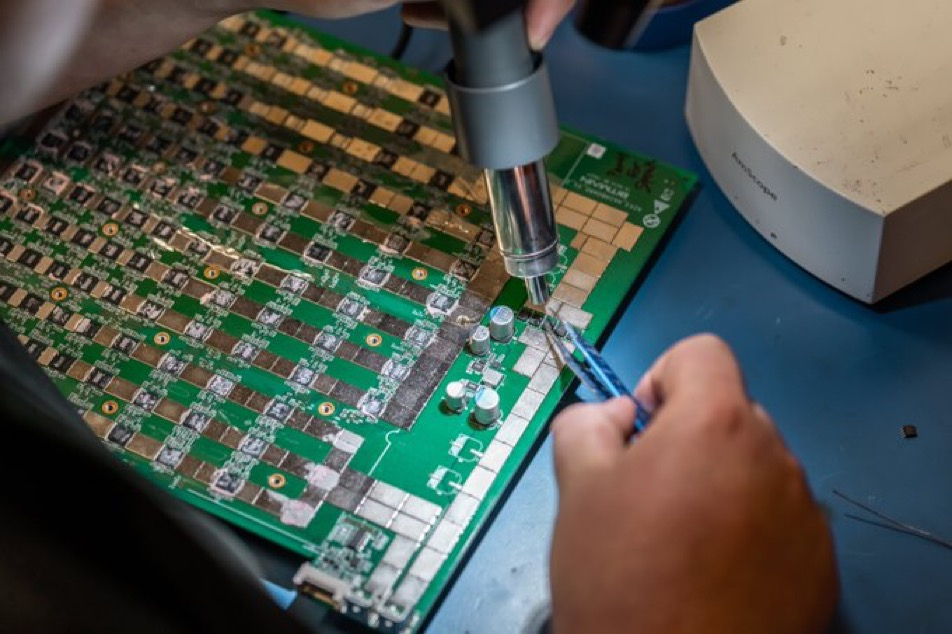
This is where vertical integration pays off. Simple Mining operates one of the largest Bitmain-certified ASIC repair centers in North America. Machines hosted at their facilities get priority bench time.
The repair process at an integrated facility looks like this:
- Monitoring system flags hashrate drop or offline status
- Technician pulls machine for diagnostics often within 24 hours
- Board-level repair (hash board, control board, PSU) performed on-site
- Machine returns to production within 1-2 weeks for most issues
Compare that to shipping a machine to the manufacturer. Round-trip transit alone takes 2–3 weeks. Add diagnostic queue time and you're looking at 4–8 weeks offline.
Simple Mining includes 12 months of repair coverage for any machine purchased through them. After that, protection plans cover parts and labor.
FAQ
Where can I host my ASIC miner?
You can host ASIC miners at specialized bitcoin hosting facilities across North America, Europe, and parts of Asia. Look for facilities with low power costs, cool climates, and on-site repair capabilities. Simple Mining operates a network of hosting sites in Iowa with $0.065–$0.08/kWh all-in rates.
Is Bitcoin mining still profitable in 2026?
Bitcoin mining remains profitable when you control electricity costs and maintain high uptime. Hosted mining helps on both fronts, but profitability still depends on hashprice, network difficulty, and your hardware efficiency.
What is the difference between hosted mining and colocation?
The terms overlap. Colocation typically means you ship your own hardware to a facility that provides power and space. Hosted mining often includes hardware sourcing, setup, and ongoing management. Simple Mining primarily offers turnkey hosted packages. They do not currently accept outside or colocation hardware.
Can I pause my hosted miner during a bear market?
At Simple Mining, yes. The pause period feature lets you power down machines when mining becomes unprofitable. You stop paying for power while paused. This protects you from operating at a loss during extended hashprice drops.
Conclusion
Mining success comes down to cost control, uptime, and repair speed. Professional bitcoin hosting solves all three better than any garage setup ever will.
Ready to see if hosted mining fits your portfolio? Schedule a free consultation or start a 7-day trial with 235 TH/s of live hashrate. No commitment required.