

Which ASIC Miner Should You Buy in 2026? A Buyer's Guide
By Josh Heine, Content Strategist at Simple Mining
Updated September 23, 2026Published September 13, 2024
The right ASIC miner makes Bitcoin mining profitable. The wrong one drains capital through high power costs and falling output. Choosing well comes down to five things: the efficiency you can afford, the power your site can actually deliver, your electricity rate, who services the machine when it fails, and what it will resell for. This guide walks that decision. For the current model-by-model ranking, see our guide to the best Bitcoin miners.
On this page · 8 sections
- How to Choose the Right ASIC Miner
- ASIC Miner Specs and Price Tiers Explained
- Hosting vs. Self-Hosting Your ASIC Miner
- How to Calculate ASIC Miner Profitability
- Bitmain vs. MicroBT vs. Canaan: Which Manufacturer Wins
- What to Do After You Buy an ASIC Miner
- FAQs About Buying ASIC Miners
- Buy the Right Miner the First Time
Key Takeaways
- Five factors decide the purchase: efficiency, power delivery, upfront cost, service access, and resale liquidity
- Efficiency in J/TH sets your monthly electricity bill and matters more than headline hashrate
- Price tiers in 2026 run from used S19-class hardware near $2,000 to premium hydro units above $9,000
- Bitmain wins on parts supply, repair turnaround, and resale liquidity over MicroBT and Canaan
- Profit math depends on four numbers: hashrate, efficiency, hashprice, and your electricity rate
How to Choose the Right ASIC Miner
The right ASIC miner depends on your electricity rate, capital budget, and hosting setup. The wrong miner often costs more in the first 12 months than the right miner does in three years. Five factors decide the call.
Hashrate and Mining Power
Hashrate measures raw mining output in terahashes per second. Higher hashrate earns more Bitcoin at the same network share. A 473 TH/s miner produces about 75 percent more revenue than a 270 TH/s unit at the same hashprice.
Power Consumption and Efficiency
Efficiency in joules per terahash decides the monthly electricity bill. Lower J/TH means lower operating cost for the same output. The S21 XP Hydro at 12 J/TH and the S21 XP at 13.5 J/TH sit close on paper, but across a year at $0.07/kWh that 1.5 J/TH gap is real money on every terahash you run.
Upfront Cost vs. Long-Term ROI
Cheap used miners often cost more over time. A $2,000 used S19 at 21 J/TH burns through its purchase savings in extra electricity in about two years at $0.07/kWh. New current-generation hardware wins on total cost of ownership for almost every buyer.
Manufacturer Reputation and Support
Bitmain dominates new sales and parts supply. MicroBT and Canaan rank second and third with smaller service ecosystems. Parts availability decides repair turnaround when a hashboard fails at month seven. We cover the full manufacturer comparison further down.
Hosting Compatibility
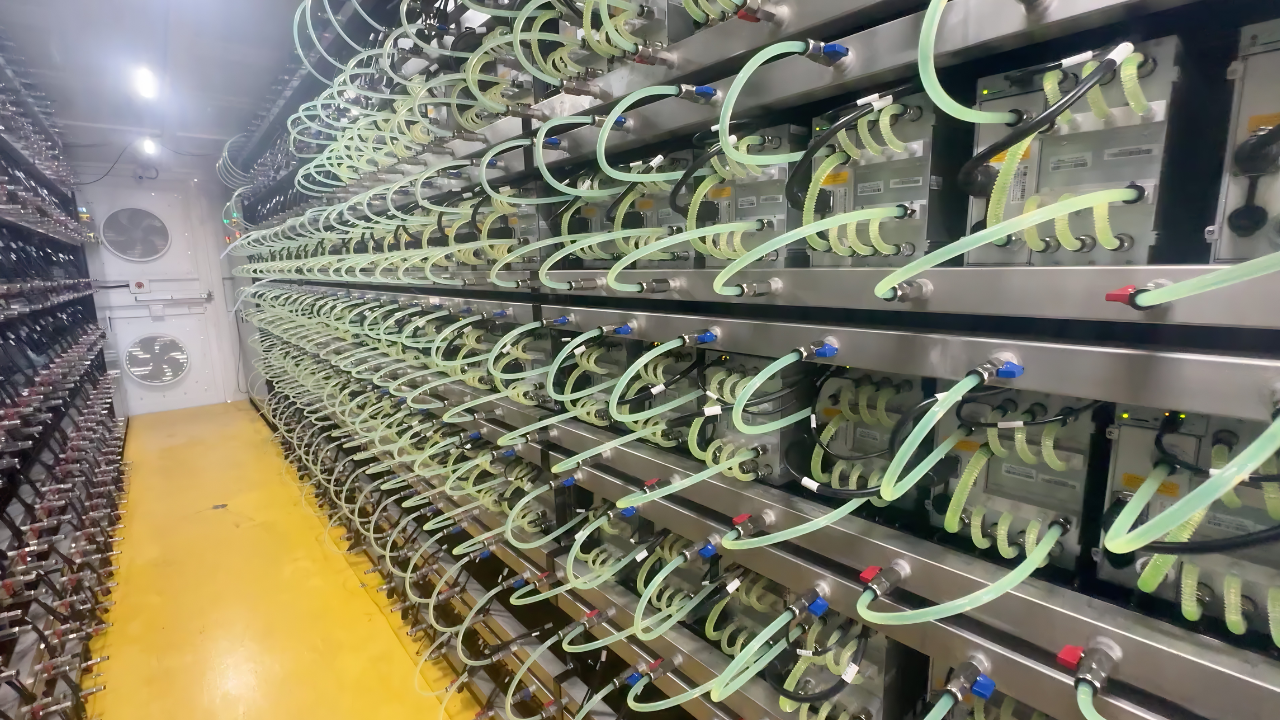
Hydro and immersion miners need facilities built for liquid cooling. Air-cooled units fit most colocation and home setups but produce more heat and noise. The choice between air and hydro often comes down to where the unit will live.
ASIC Miner Specs and Price Tiers Explained
ASIC miner specs come down to five numbers, and price tiers run from used S19 hardware near $2,000 to flagship hydro units near $15,000.
The Five Specs That Matter
The five numbers that show up on every spec sheet:
- Hashrate (TH/s): Bitcoin mining output per second
- Power Draw (W): Wall electricity consumption at full load
- Efficiency (J/TH): Energy required per terahash; lower is better
- Algorithm: SHA-256 for Bitcoin
- Cooling Type: Air, hydro, or immersion
2026 ASIC Miner Price Tiers
Price tiers in 2026 break into three bands. Used S19-class hardware sits at $1,500 to $3,000 with 18 to 28 J/TH efficiency. Mid-range air-cooled units like the Antminer S21 XP are about $4,250 at 13.5 J/TH when in stock. Premium hydro units start near $9,000, with the Antminer S21j XP Hydro at $9,500 and the Antminer S23 Hydro at $15,000, both through Simple Mining.
Hosting and Electricity Costs
Hosting and electricity make up the second half of total cost of ownership. A 5,676W S21 XP Hydro running at $0.07/kWh costs about $286 per month in all-in hosted power. Run that same unit at $0.12/kWh residential power and the monthly bill climbs to $490.
Hosting vs. Self-Hosting Your ASIC Miner
Professional hosting beats self-hosting for most buyers because of noise, heat, and electricity rate gaps.
Self-Hosting vs. Hosted Mining at a Glance
| Factor | Self-Hosting (Home) | Professional Hosting |
|---|---|---|
| Electricity Rate | $0.10 to $0.16/kWh residential | $0.065 to $0.08/kWh institutional |
| Noise | 75 dB or more at full load | Handled in industrial space |
| Cooling | Buyer responsibility | Built into facility |
| Maintenance | Buyer fixes failures | Included or repair-as-a-service |
| Uptime | Variable | 95%+ average at a professional host |
| Initial Setup | Complex electrical work | Plug and hash |
When Hosting Wins
Single-phase 240V residential install runs $1,500 to $4,000 of new electrical work for one miner. That capex disappears with a hosting contract at Simple Mining. The difference between $0.07/kWh hosted power and $0.13/kWh residential power on a 5,676W miner equals about $245 per month. Over 24 months, that gap covers a second miner.
When Self-Hosting Makes Sense
The case for self-hosting holds when a buyer has cheap industrial power under their own meter and wants to control hardware on-site. For everyone else, hosting wins on operating cost, uptime, and time investment.
How to Calculate ASIC Miner Profitability
ASIC profit equals daily revenue from hashrate times hashprice minus daily power cost from wattage and electricity rate. The math is simple once the inputs are clear.
1. Input Your Hashrate
Use the hashrate from the manufacturer spec sheet in TH/s. The S21 XP Hydro lists 473 TH/s.
2. Enter Power Consumption
Use the wall draw in watts. The S21 XP Hydro draws 5,676 watts at full load.
3. Set Your Electricity Rate
Use the hosted rate from your provider or your local rate per kWh. Simple Mining charges $0.065 to $0.08/kWh all-in.
4. Review Daily and Monthly Profit
Daily revenue equals hashrate times hashprice. Daily cost equals wattage divided by 1,000 then multiplied by 24 then by your electricity rate. Daily profit is the difference.
Worked example: an S21 XP Hydro at 473 TH/s drawing 5,676W. Daily revenue is 473 multiplied by the current hashprice. Daily power cost at $0.07/kWh is 5.676 kW times 24 hours times the rate, which comes to $9.54. Subtract the second from the first for daily profit before pool fees. Hashprice moves every day, so our Bitcoin mining calculator runs the live figure for any machine and rate.
Bitmain vs. MicroBT vs. Canaan: Which Manufacturer Wins
Bitmain leads the Bitcoin ASIC market on parts supply, repair networks, and resale liquidity. MicroBT and Canaan produce capable hardware but trail on service ecosystem and secondary market depth.
Bitmain Antminer
Bitmain holds roughly 70 percent of new Bitcoin ASIC sales. Antminer parts ship next-day from most U.S. hosting networks. Simple Mining holds Bitmain certification for in-house repairs at our Cedar Falls facility. Resale liquidity stays strong because most operators run Antminers and the secondary market trades them daily.
MicroBT Whatsminer
MicroBT runs second in market share with the Whatsminer line. The hardware reaches similar efficiency tiers to Antminer at the high end. Parts and firmware support trail Bitmain because MicroBT routes most service through Asia. We see Whatsminer repair turnaround run three to four weeks compared to days for Antminer.
Canaan AvalonMiner
Canaan ranks third with the AvalonMiner line. The units work well at moderate hashrate but face limited firmware development and a thinner secondary market. Resale value drops faster than Antminer or Whatsminer when buyers want to upgrade.
From the repair bench: We service Bitmain miners every day in Cedar Falls. Most parts ship within 24 hours from our inventory. Whatsminer repairs route through Asian suppliers and stretch to weeks. That uptime gap shows up in your bottom line over 12 months of operation.
For most buyers in 2026, Bitmain remains the safer bet on serviceability and resale value. That alignment is why Simple Mining sells Bitmain hardware as our core inventory.
What to Do After You Buy an ASIC Miner
After purchase your ASIC miner needs facility setup, repair coverage, and live monitoring. The hardware is a tool; the operations behind it decide profit.
Setup and Onboarding
Most buyers ship the unit straight to a hosting facility. Simple Mining handles configuration, pool pointing, and dashboard onboarding within seven days of arrival. The buyer never touches a command line.
Repairs and Maintenance
Hashboards account for most of the repair tickets we open, followed by power supplies, with fans a distant third. A repair window from the seller covers most early-life issues. Miners bought from Simple Mining include free repair labor and Year 1 Repair Coverage for the first 12 months on eligible repairs.
Protection and Warranty Coverage
Bitmain offers a 365-day manufacturer warranty on direct purchases. Miners bought from Simple Mining include Year 1 Repair Coverage for the first 12 months from each unit's commencement date, with free repair labor, unlimited fan replacements and a $500 annual parts allowance. After Year 1 you can enroll in Simple Mining's Protection Plan to extend coverage.
Monitor Your Hashrate and Earnings
Real-time dashboards show uptime, hashrate, and curtailment events at the unit level. Most professional hosts send alerts when a miner drops offline. The Simple Mining client dashboard pairs live performance data with billing detail so the math stays transparent.
FAQs About Buying ASIC Miners
How long does an ASIC miner take to pay for itself?
Payback depends on hashrate, efficiency, electricity cost, and Bitcoin price, and it swings hard with hashprice. A current-generation hydro miner on hosted power is a multi-year payback at a flat hashprice, and considerably shorter if Bitcoin appreciates. Run your own machine and rate through the Bitcoin mining profitability calculator before you commit capital.
Can I start Bitcoin mining with just one ASIC miner?
Yes. Most professional hosting providers accept single-unit orders with no minimum. Simple Mining offers a free 7-day trial on an Antminer S21+ (235 TH/s) before purchase so buyers can test the dashboard and uptime first.
Is Bitcoin mining still profitable after the halving?
Profitability depends on miner efficiency and electricity costs. Miners running below 15 J/TH on power under $0.08/kWh continue to produce monthly profit through the current cycle. Older S19-class units near 25 J/TH operate at thin margins or losses at the same power rate.
Do I need technical experience to operate an ASIC miner?
No. Managed hosting handles setup, configuration, firmware updates, and repairs. The buyer monitors uptime and earnings through a web dashboard with no command-line work required.
What is the typical lifespan of an ASIC miner?
ASIC miners run three to five years under good conditions before efficiency makes them obsolete. Proper cooling and on-site repair extend useful life. The economic lifespan often ends before the mechanical one because newer generations push hashprice down.
Can I mine cryptocurrencies other than Bitcoin with a SHA-256 ASIC miner?
SHA-256 ASIC miners mine Bitcoin and other Bitcoin-fork chains like Bitcoin Cash. They cannot mine altcoins built on different algorithms. Scrypt-based coins like Litecoin and Dogecoin require different hardware such as the Antminer L9 series.
Buy the Right Miner the First Time
The best ASIC miner is the one that earns Bitcoin under your specific power and budget reality. Hashrate sells the spec sheet; efficiency and operations decide the bank balance.
Buy Bitcoin miners from current Bitmain Antminer inventory, compare the lineup in our guide to the best Bitcoin miners, or start a free 7-day hosted trial on an Antminer S21+ (235 TH/s) before you commit to a purchase.