

Antminer S23 Hydro Review: 2026 Specs and ROI Breakdown
By Josh Heine, Content Strategist at Simple Mining
Updated August 21, 2026Published April 13, 2026
The Bitmain Antminer S23 Hydro delivers 563 TH/s at 9.5 J/TH. It is the most efficient hydro-cooled SHA-256 miner in Bitmain's current lineup. Water replaces fans, allowing the unit to sustain full power without thermal throttling.
This review covers specs, infrastructure requirements, profitability math, and comparisons against the S21 XP Hydro, S21e XP Hydro, and S21+ Hydro so you can evaluate where the S23 fits your operation.
On this page · 10 sections
- What Is the Bitmain Antminer S23 Hydro
- Antminer S23 Hydro Technical Specifications
- How Hydro Cooling Works on the Antminer S23 Hydro
- Antminer S23 Hydro Profitability and ROI
- Antminer S23 Hydro vs S21 XP Hydro and S21e XP Hydro
- Infrastructure Requirements for the S23 Hydro
- Operational Risks and Maintenance for Hydro Miners
- Who Should Buy the Antminer S23 Hydro
- How to Buy and Host the Antminer S23 Hydro
- FAQs About the Antminer S23 Hydro
Key Takeaways
- The Antminer S23 Hydro delivers 563 TH/s at 9.5 J/TH, making it the most efficient hydro-cooled SHA-256 miner in Bitmain's current lineup.
- At a hosted rate of $0.08/kWh the S23 Hydro maintains the widest margin of safety against difficulty increases among current-gen hardware.
- The 3U variant doubles output to 1,160 TH/s in a single chassis for facilities with electrical headroom.
- Units purchased from Bitmain carry a 365-day manufacturer warranty. Units purchased through Simple Mining receive 12 months of Miner Protection coverage.
- Professional hosting eliminates the CDU and plumbing buildout that often costs more than the miner itself.
What Is the Bitmain Antminer S23 Hydro
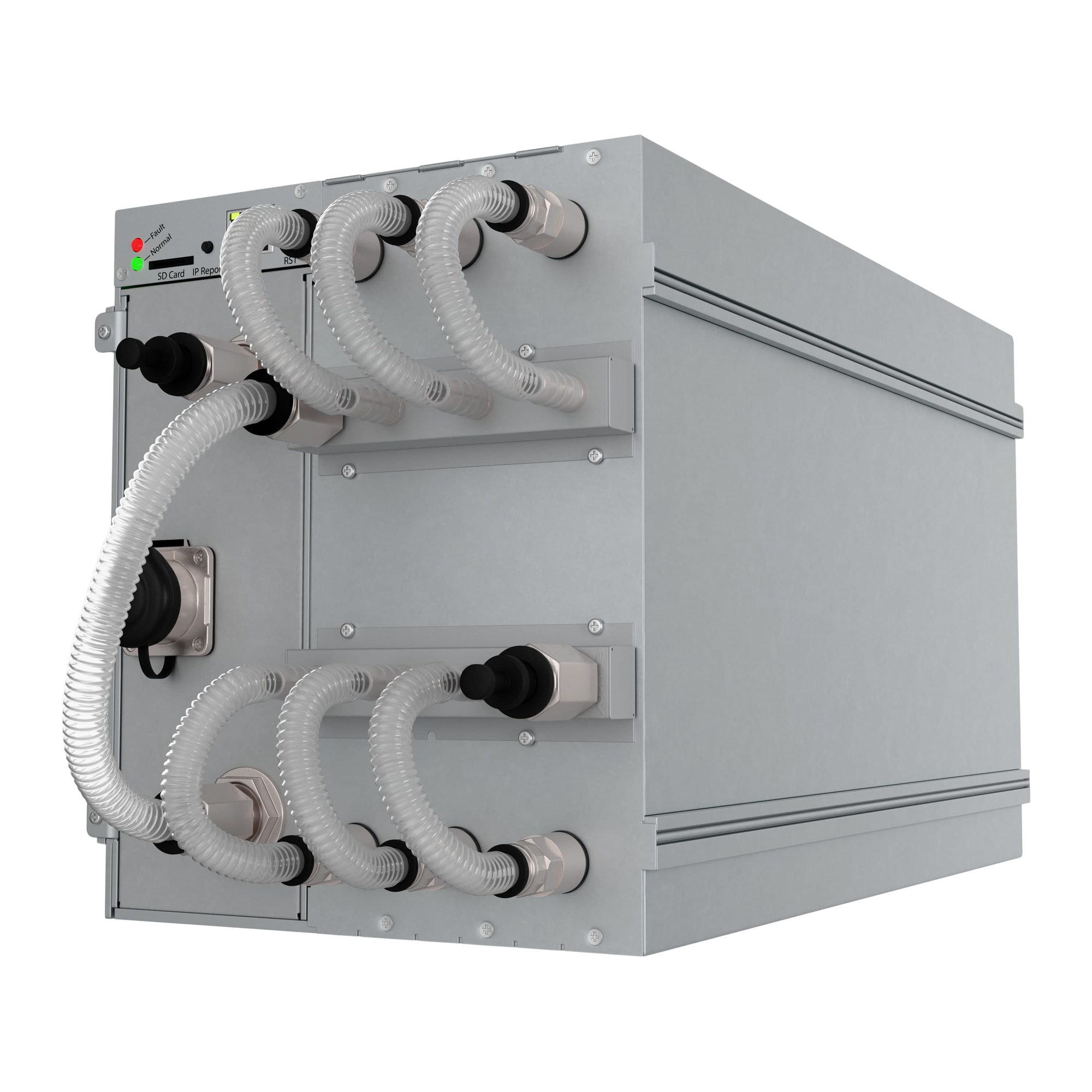
The Antminer S23 Hydro is a liquid-cooled Bitcoin miner built for enterprise-scale operations. Instead of fans pushing air across heatsinks, water circulates through internal channels to pull heat from the ASIC chips. This design targets facilities with existing hydro infrastructure or hosting providers equipped for liquid-cooled hardware.
At 9.5 J/TH the S23 Hydro uses less energy per hash than any other Bitmain hydro model. That efficiency gap compounds across every hour of operation and widens the margin of safety against network difficulty increases.
Antminer S23 Hydro Technical Specifications
| Specification | S23 Hydro | S23 Hydro 3U |
|---|---|---|
| Hashrate | 563 TH/s (±3%) | 1,160 TH/s (±3%) |
| Power Consumption | 5,349W (±5%) | 11,020W (±5%) |
| Efficiency | 9.5 J/TH | 9.5 J/TH |
| ASIC Chip | Next-gen SHA-256 | Next-gen SHA-256 |
| Cooling | Hydro (liquid) | Hydro (liquid) |
| Voltage | 380-415V 3-phase | 380-415V 3-phase |
| Noise | ~50 dB | ~50 dB |
| Inlet Coolant Temp | 20-50°C | 20-50°C |
| Warranty | 365 days | 365 days |
The 3U variant doubles the hashrate to 1,160 TH/s in a single rack-mount chassis. It shares the same 9.5 J/TH efficiency for facilities with the electrical headroom to support 11 kW per unit.
Hashrate and SHA-256 Mining Performance
Hashrate measures how many calculations the miner performs per second. At 563 TH/s the S23 Hydro competes for a proportional share of the ~450 BTC mined daily across the entire network. Your actual earnings depend on total network difficulty, which adjusts every 2,016 blocks.
Power Consumption and J/TH Efficiency
J/TH (joules per terahash) is the metric that determines long-term profitability. At 9.5 J/TH the S23 Hydro consumes 27% less electricity per hash than the S21e XP Hydro at 13 J/TH. Over thousands of operating hours that gap translates to meaningful cost savings.
Dimensions and Rack Form Factor
The S23 Hydro fits standard data center racks. Hydro miners occupy less space than air-cooled equivalents because they eliminate bulky fan assemblies. Plan rack layouts around coolant flow and water connections rather than physical footprint alone.
How Hydro Cooling Works on the Antminer S23 Hydro
Liquid cooling circulates water (or a water-glycol mixture) through channels that contact the ASIC chips. Heat transfers from silicon to coolant, then flows to an external unit that dissipates the heat.
Liquid Cooling System Components
Three pieces make hydro mining work:
- CDU (Coolant Distribution Unit): The external unit that chills and circulates coolant through the system
- Manifolds: Connect multiple miners to shared cooling loops so one CDU can serve a fleet
- Internal water blocks: Contact points inside the miner that draw heat from chips
Flow rate targets are 8.0-10.0 L/min per unit. Use deionized water with biocide or manufacturer-approved coolant. Tap water corrodes water blocks within months.
Thermal Performance and Heat Dissipation
Water absorbs and transfers heat far better than air. The S23 Hydro sustains full hashrate even in warmer ambient conditions where air-cooled miners would throttle. Chip temperatures stay in the 45-60°C range under proper cooling, compared to 75-85°C for air-cooled units.
Noise Reduction vs Air-Cooled Miners
At about 50 dB the S23 Hydro operates near the volume of a quiet conversation. Air-cooled Antminers at 75+ dB sound like a vacuum cleaner. The coolant loop removes the fan wall entirely, which is where hydro sits on the data center noise scale against air-cooled racks. CDU pumps add some noise but the total system stays far quieter than air-cooled machines.
Antminer S23 Hydro Profitability and ROI
Profitability depends on Bitcoin price, network difficulty, and electricity cost. The S23 Hydro's 9.5 J/TH efficiency gives it the widest margin of safety in Bitmain's lineup.
Daily and Monthly BTC Revenue Estimates
The S23 Hydro consumes 128.38 kWh per day (5.349 kW × 24 hours). Revenue varies with hashprice. Use the Simple Mining Bitcoin Mining Calculator to model scenarios with live data.
Break-Even Electricity Cost
Daily electricity cost at common hosting rates:
| Electricity Rate | Daily kWh Cost |
|---|---|
| $0.065/kWh | $8.34 |
| $0.07/kWh | $8.99 |
| $0.075/kWh | $9.63 |
| $0.08/kWh | $10.27 |
| $0.10/kWh | $12.84 |
| $0.12/kWh | $15.41 |
The S23 Hydro's efficiency advantage shows at every price tier. At $0.08/kWh a 9.5 J/TH machine retains more margin than a 13 J/TH machine drawing comparable power. Check the Bitcoin network stats for current revenue figures.
S23 Hydro ROI vs Air-Cooled Alternatives
Hydro miners cost more upfront (hardware plus infrastructure). Efficiency gains and reduced facility cooling requirements can offset that premium over a multi-year deployment. For operators already running hydro infrastructure, the S23 Hydro slots into existing systems without additional buildout.
Antminer S23 Hydro vs S21 XP Hydro and S21e XP Hydro
The S23 Hydro sits at the top of Bitmain's hydro efficiency ladder.
| Model | Hashrate | Efficiency | Cooling |
|---|---|---|---|
| S23 Hydro | 563 TH/s | 9.5 J/TH | Liquid |
| S21 XP Hydro | 473 TH/s | 12 J/TH | Liquid |
| S21e XP Hydro | 430 TH/s | 13 J/TH | Liquid |
| S21 XP (Air) | 270 TH/s | 13.5 J/TH | Air |
S23 Hydro vs S21 XP Hydro
The S21 XP Hydro delivers 473 TH/s at 12 J/TH. The S23 Hydro produces 19% more hashrate at 21% better efficiency. Both require the same hydro infrastructure. For operators choosing between the two, the S23 commands a higher purchase price but delivers lower cost per terahash over the life of the machine.
S23 Hydro vs S21e XP Hydro
The S21e XP Hydro delivers 430 TH/s at 13 J/TH. The S23 Hydro offers 31% more hashrate and 27% better efficiency. The S21e XP Hydro costs less upfront and serves as a strong mid-tier option for operators who want hydro benefits at a lower price point.
S23 Hydro vs S21 XP Air-Cooled
The S21 XP air-cooled delivers 270 TH/s at 13.5 J/TH on standard 220-277V power with no plumbing. The S23 Hydro offers more than double the hashrate and 30% better efficiency. For operators without hydro infrastructure, deploying air-cooled units avoids CDU and plumbing investment.
Infrastructure Requirements for the S23 Hydro
The S23 Hydro requires purpose-built infrastructure. This is not plug-and-play equipment.
CDU and Water Loop Setup
Every deployment needs a CDU sized for total heat load. A single S23 Hydro dissipates about 5.3 kW of heat. Multiply by fleet size and add 20% headroom. Closed-loop systems with filtered coolant are standard. Professional installation is typical.
Electrical Capacity and Rack Space
The S23 Hydro requires 380-415V three-phase power. Standard residential circuits will not work. Plan for PDUs and circuit capacity rated for your deployment scale.
Facility Climate and Environmental Controls
Coolant inlet temperatures between 20-50°C work best. Hydro cooling simplifies facility HVAC since heat transfers into the coolant rather than heating the room air. Water management (leak detection, flow monitoring, coolant maintenance) replaces the fan filters of traditional setups.
For operators who find infrastructure investment exceeds the hardware cost, professional hosting with hydro-ready facilities eliminates the buildout.
Operational Risks and Maintenance for Hydro Miners
Cooling System Failures and Safeguards
If coolant flow stops, chips overheat within seconds. The S23 Hydro includes automatic shutdown when temperatures exceed safe thresholds. Redundant cooling loops provide failover protection for critical deployments.
Hashboard Degradation Over Time
All ASIC miners degrade. Hashboards lose performance as chips wear from continuous operation. Hydro cooling may extend component life through stable temperatures, but plan for eventual replacement. A 3-5 year operational lifespan is typical.
Warranty and Repair Coverage
Units purchased from Bitmain include a 365-day manufacturer warranty covering manufacturing defects. Units purchased through Simple Mining include 12 months of repair coverage through the Miner Protection Plan, which covers hashboard and PSU failures with no shipping delays.
Simple Mining operates a Bitmain-certified repair facility with in-house technicians in Iowa.
Who Should Buy the Antminer S23 Hydro
Enterprise and Large-Scale Mining Operations
Operators deploying 10+ units can amortize CDU costs across a fleet. At 9.5 J/TH a 1 MW deployment of S23 Hydro units produces more Bitcoin than any previous hydro generation on the same power budget.
Investors Seeking Hands-Off BTC Exposure
Investors who want hardware ownership without operational burden can purchase and host through a provider with hydro capacity. Simple Mining operates hydro-capable facilities in Iowa with precision billing and 12-month Miner Protection coverage. This approach offers potential tax advantages through equipment depreciation while avoiding facility complexity.
Hosting Customers with Hydro-Ready Facilities
If your hosting provider already operates hydro infrastructure, the S23 Hydro deploys without personal infrastructure investment. Confirm compatibility before purchasing. Not all providers support hydro miners.
How to Buy and Host the Antminer S23 Hydro
- Model profitability at your expected electricity rate using the Simple Mining Calculator. Compare the S23 Hydro against alternatives based on your infrastructure and capital.
- Verify hosting compatibility. Confirm your facility or hosting provider supports hydro cooling before purchasing. Buying a hydro miner without a place to run it creates expensive storage.
- Purchase from authorized sellers. Buy from reputable sources to ensure warranty coverage and authentic hardware.
- Deploy and monitor. Access dashboard tools to track uptime, hashrate, and earnings. Simple Mining provides real-time monitoring for hosted units.
The machine that mines today earns Bitcoin that the machine on order cannot.
The S23 Hydro is in stock at Simple Mining at $15,000. Schedule a call to lock in a unit and review hosting options at $0.08/kWh.
FAQs About the Antminer S23 Hydro
What is the hashrate of the Antminer S23 Hydro?
The standard S23 Hydro delivers 563 TH/s. Bitmain lists the 3U variant at 1,160 TH/s, for facilities with electrical capacity to support 11 kW per unit.
Can I run an Antminer S23 Hydro at home?
Home deployment is not practical. The S23 Hydro requires a CDU, specialized plumbing, and 380-415V three-phase power that exceed residential infrastructure.
What happens if the S23 Hydro cooling system fails?
The miner shuts down when coolant flow stops or temperatures exceed safe thresholds. Most failures require professional repair of the CDU or water loop rather than the miner itself.
How loud is the S23 Hydro compared to air-cooled miners?
At about 50 dB the S23 Hydro operates near the volume of a quiet conversation. Air-cooled models produce 75+ dB from fan operation.
Does the S23 Hydro qualify for hosting at standard data centers?
Most standard data centers lack liquid cooling infrastructure. You need a facility built for hydro ASIC deployment or a hosting provider with existing hydro capacity.