
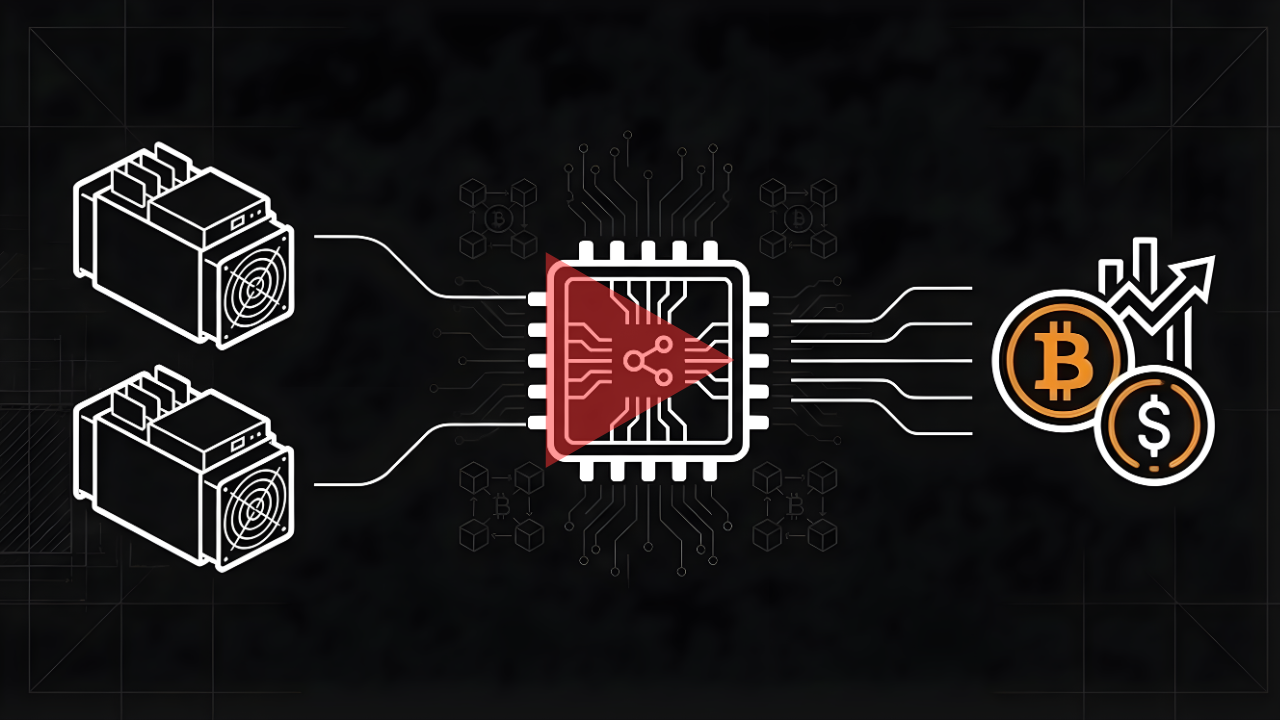
This short video explains what hashprice is, what drives it, and why it matters for Bitcoin miners and investors. Below you'll find the full transcript and FAQs. For a deeper look at how hashprice is calculated and how to use it in mining decisions, read the full written guide on what hashprice is.
Read the full guide: What is Hashprice?
Full Transcript
What is hashprice?
Bitcoin hashprice measures how much revenue a miner can earn for each unit of computational power. A hash is a single calculation completed by a mining machine. Hashrate is the rate at which hashes are computed.
The hashrate of most individual machines is measured in terahashes per second, where one terahash equals one trillion hashes per second. Hashprice is determined by several factors: the current Bitcoin price, network difficulty, the block subsidy, and transaction fees.
Hashprice rises and falls as these variables change. It is an important metric for miners because it measures profitability per unit of work. By monitoring hashprice, miners and investors can decide whether to scale operations, adjust power consumption, or upgrade equipment.
Hashprice helps estimate a miner's potential earnings by balancing rewards from computational power against the costs of running operations.
To learn more about Bitcoin mining, visit simplemining.io.
FAQs
What is hashprice in simple terms?
Hashprice is the revenue a Bitcoin miner earns per unit of hashrate over a given period. It's typically expressed in dollars per terahash per second per day ($/TH/s/day). When hashprice is high, each unit of computing power generates more revenue.
What factors determine hashprice?
Four variables drive hashprice: the current Bitcoin price, network difficulty, the block subsidy, and transaction fees. A rising Bitcoin price or higher transaction fees push hashprice up. Rising network difficulty pushes it down because the same hashrate wins a smaller share of total rewards.
How is hashprice different from hashrate?
Hashrate measures raw computing speed (how many hash calculations a machine performs per second). Hashprice measures the revenue that computing speed generates. A machine can have high hashrate but low hashprice if network difficulty is high or the Bitcoin price is low.
Why does hashprice matter for miners?
Hashprice tells a miner whether their operation is profitable at current market conditions. If hashprice drops below the cost to produce each unit of hashrate (electricity, hosting, maintenance), the miner operates at a loss. It's the single metric that connects machine output to dollar-denominated revenue.
Does hashprice change every day?
Yes. Hashprice fluctuates constantly because Bitcoin's price moves around the clock and transaction fees vary with network demand. Network difficulty adjusts roughly every two weeks, and the block subsidy changes at each halving event (approximately every four years).
How do miners use hashprice to make decisions?
Miners compare hashprice against their all-in operating cost per terahash. When hashprice is strong, it can signal a good time to scale operations or add machines. When hashprice is compressed, miners may reduce power consumption, pause older equipment, or accelerate upgrades to more efficient hardware.
By Josh Heine, Content Strategist at Simple Mining
Published: September 10, 2024
Modified: March 10, 2026