

What Is an AI Data Center?
By Josh Heine, Content Strategist at Simple Mining
Updated July 27, 2026Published June 30, 2026
An AI data center is a facility built to train and run artificial intelligence models at scale. It packs thousands of interconnected GPUs into high-density racks that draw heavy power and need advanced cooling. Two jobs define the work. Training teaches a model and inference runs it for users. Demand for both is climbing faster than the grid can keep up, and the chips are not the bottleneck. Power is.
On this page · 13 sections
- What Is an AI Data Center?
- How Are AI Data Centers Different From Traditional Data Centers?
- Key Components of AI Data Center Infrastructure
- Power and Cooling Requirements for AI Workloads
- Who Is Building AI Data Centers?
- How Do AI Data Centers Make Money?
- Challenges in AI Data Center Deployment
- How Does AI Infrastructure Overlap With Bitcoin Mining?
- Why Ready-to-Build Sites Matter
- How to Evaluate an AI Data Center Site
- The Future of AI Data Centers
- FAQs
- Power Decides the AI Buildout
Key Takeaways
- An AI data center is purpose-built for AI training and inference, not general computing.
- The core hardware is GPU clusters and AI accelerators linked by high-speed networking like InfiniBand.
- AI racks run at much higher power density than traditional racks, so liquid cooling replaces most air cooling.
- The main bottleneck is power. Securing megawatts and a grid connection takes years, not months.
- Sites that already have permits, grid access, and fiber in place can deploy in months instead of 3 to 5 years.
What Is an AI Data Center?
An AI data center is a specialized facility built to train and run AI models. It pairs dense GPU compute with high-speed networking and advanced cooling. From the outside it looks like a normal data center. Inside the work is different.
A traditional data center handles many small jobs like email and business apps. An AI data center does one big thing. It runs one giant model across thousands of chips at once.
Two workflows define the job:
- Training teaches the model by feeding it huge datasets over many cycles.
- Inference runs the trained model to answer a prompt or a query in real time.
Both jobs need the chips kept busy at all times. If the data or the network falls behind, the whole system slows down.
How Are AI Data Centers Different From Traditional Data Centers?
The core difference is the hardware. AI data centers run on GPUs and accelerators built for parallel work, while traditional centers run on CPUs built for general tasks. That one choice reshapes everything downstream.
| Feature | Traditional Data Center | AI Data Center |
|---|---|---|
| Compute | CPUs for general-purpose tasks | GPUs and AI accelerators for parallel processing |
| Power density | Lower power per rack | Much higher power per rack |
| Cooling | Standard air conditioning | Liquid cooling for high-density racks |
| Networking | Standard ethernet | High-speed fabrics like InfiniBand |
Computing Architecture
A CPU works through tasks in small fast steps. A GPU breaks one big problem into thousands of pieces and solves them at once. This is parallel processing. It is why a GPU trains a model in days instead of years.
Power Density
AI racks pull far more power than standard server racks. Packing that many high-draw chips into one rack raises the power density of the whole hall. More density means more heat in less space, which strains both the grid and the cooling system.
Cooling Systems
High-density AI chips throw off intense heat. Air conditioning alone cannot keep up at this density. Liquid cooling moves heat away from the chips far better than air, so it replaces most air cooling in AI halls.
Network Infrastructure
A single model is too big for one machine. Thousands of GPUs must act as one computer, so they need to talk at full speed with little delay. Standard ethernet is too slow for this. AI data centers use high-speed fabrics like InfiniBand or specialized ethernet to move data between chips in real time.
Key Components of AI Data Center Infrastructure
Five core systems make up an AI data center. Each one has to scale together. A weak link in any of them caps the whole cluster.
GPU Clusters and AI Accelerators
GPU clusters are the brains of an AI data center. An accelerator is a chip built to speed up machine learning work. GPUs are the most common accelerator. Newer designs like TPUs and NPUs handle the same math with different trade-offs.
High-Bandwidth Networking
High-bandwidth networking links thousands of GPUs into one system. The faster the link, the less time chips sit idle waiting for data. InfiniBand is a networking standard built for this high-volume low-delay traffic. Some operators use specialized ethernet to reach the same goal.
Power Distribution Systems
Power distribution delivers steady high-voltage power to dense racks. AI halls need redundant feeds so a single fault does not take the cluster offline. A reliable grid connection sits at the center of this. Without it, the rest of the build cannot run.
Advanced Cooling Technology
Advanced cooling pulls heat out of high-density racks. Three methods do most of the work:
- Liquid cooling circulates coolant straight to the chips.
- Immersion cooling submerges hardware in a fluid that absorbs heat.
- Rear-door heat exchangers cool the hot air as it leaves the back of a rack.
Most modern AI builds lean on liquid cooling because air alone cannot match the density.
Storage and Data Management
Training runs on huge datasets that must reach the GPUs without delay. Slow storage starves the chips and wastes compute. AI data centers use high-speed storage like NVMe SSDs and high-bandwidth memory to keep data moving.
Power and Cooling Requirements for AI Workloads
AI workloads demand far more power and cooling than any prior class of computing. This is the part that reshapes where these facilities get built.
Power Consumption at Scale
Training burns power in long heavy bursts. Inference runs around the clock to serve live users. Both push large steady loads onto the local grid. Goldman Sachs projects data center power demand could rise as much as 165% by 2030 against 2023 levels, with AI driving the surge. This is why power access now shapes site selection more than land or labor.
Liquid Cooling vs. Air Cooling
The split comes down to density.
- Air cooling: works for lower-density workloads and older server halls.
- Liquid cooling: required for high-density AI racks and removes heat far better.
Most large AI builds use closed-loop liquid cooling. The same water circulates again and again through a sealed system, so the facility fills it once and reuses it with little waste. Microsoft's Fairwater build shows the model at scale. This design answers a common worry about AI water use. A closed loop does not drink water around the clock the way many assume, which changes how much water an AI data center uses.
Renewable Energy and Grid Access
AI data centers chase sites with strong grid access and clean power. A robust grid connection keeps the cluster fed, and a renewable mix keeps the build aligned with sustainability goals. Power source matters as much as power volume. Many operators favor regions rich in wind or hydro.
Who Is Building AI Data Centers?
Three groups build most AI data centers today. Each comes at the problem from a different angle.
Hyperscalers and Cloud Providers
Hyperscalers build the largest AI data centers in the world. Cloud giants like Microsoft and Amazon run massive AI campuses for their own models and their customers. Their budgets run into the tens of billions of dollars per buildout.
AI Companies and Tech Startups
AI companies need dedicated compute beyond shared public cloud. Frontier model training demands capacity that off-the-shelf cloud cannot always supply. Many sign long-term deals for their own clusters.
Infrastructure Developers and Operators
Specialized operators develop sites and infrastructure for AI tenants. They secure power and grid access ahead of demand. A tenant can lease the site. Some enter a joint venture. Others buy outright. Simple Mining is one operator in this space, developing a portfolio of 234 MW of Tier 3 AI data center infrastructure across the Midwest.
How Do AI Data Centers Make Money?
AI data centers earn revenue by renting compute and capacity to the companies that run AI workloads. The deal structure shifts with the tenant.
Colocation and Managed Hosting
In colocation, the customer owns the hardware and pays for space and power. The operator runs the building and keeps the machines online. This suits tenants that want control of their own gear.
Dedicated Compute Leases
A dedicated compute lease is a long-term deal for GPU capacity. The customer leases a block of compute for training or inference and pays over the term. This fits AI companies that need scale without owning a facility.
Build-to-Suit and Joint Venture Partnerships
Some deals are custom from the ground up. An operator builds a facility for one tenant. The deal might be a lease. It might be a joint venture. It might be an outright sale.
Challenges in AI Data Center Deployment
The hard part of an AI data center is not the technology. The hard part is power. Four obstacles slow almost every project.
Power Availability and Grid Interconnect
Securing a large power allocation is the top bottleneck. A new grid interconnect can take years to approve and energize. Many sites stall here before a single rack arrives.
Permitting and Environmental Approvals
Permits add real time to any build. Most sites need environmental and land-use review before work starts. These approvals run on government timelines, not tech timelines.
Construction Timelines and Lead Times
Building from scratch takes years, not months. Long lead times on transformers and switchgear stretch the schedule further. Delays in one piece push out everything downstream.
Workforce and Technical Expertise
Running AI infrastructure takes rare skills. Few people know how to operate high-density power and liquid cooling at scale. That talent gap slows both construction and operation.
How Does AI Infrastructure Overlap With Bitcoin Mining?
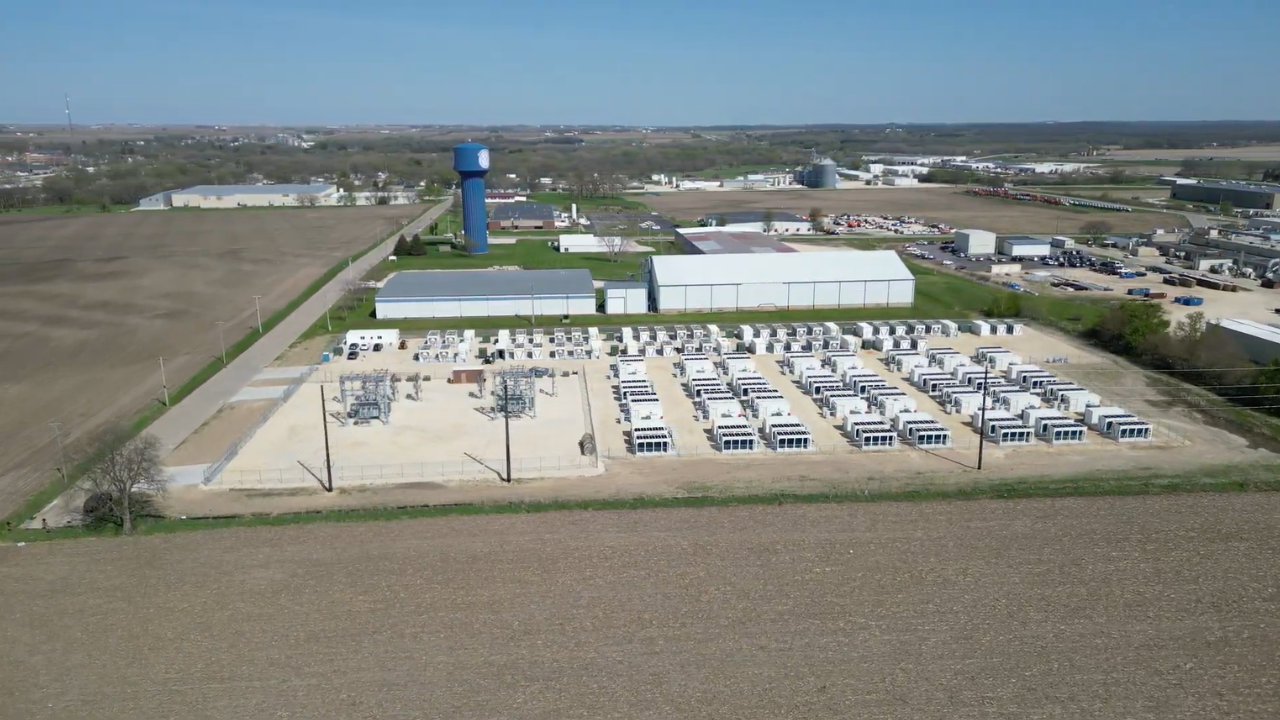
AI data centers and Bitcoin mining share the same hard problem: large amounts of cheap reliable power and serious cooling. Both compete for megawatts and grid access. Both run hot and need strong cooling. The overlap is real, and it explains why some power sites can serve either use.
The hardware tells them apart:
- AI uses GPUs and high-speed networking to run many kinds of models.
- Bitcoin mining uses single-purpose ASICs built for one cryptographic function.
An ASIC does one job and does it well. A GPU cluster is flexible but needs much faster networking between chips. From an operator's seat the groundwork looks similar. Power procurement and closed-loop cooling carry over from one to the other. A team that runs Bitcoin mining at scale already understands the power and cooling demands AI brings.
Why Ready-to-Build Sites Matter
The slowest part of an AI build is the groundwork: securing power, permits, and a grid interconnect. Sites that already have that work done can come online in months instead of years, which is why operators with secured power and infrastructure are positioned to move fastest. Simple Mining is developing a portfolio of 234 MW of Tier 3 AI data center infrastructure across the Midwest. You can read more on our AI infrastructure page.
How to Evaluate an AI Data Center Site
Judge an AI data center site on whether the slow expensive groundwork is already done. Run every candidate through the same checklist:
- Power capacity: Is enough MW secured and available?
- Grid interconnect: Is the connection complete and reliable?
- Permitting: Are environmental and construction approvals cleared?
- Fiber access: Is high-speed connectivity in place?
- Cooling readiness: Can the site support liquid cooling at density?
- Engagement options: Does the operator offer lease, JV, or purchase?
A site that checks every box can deploy in months. A site that does not can stall for years.
The Future of AI Data Centers
AI data centers will keep growing in size and power draw for years to come. Three trends stand out:
- Power demand keeps climbing, pushing builds toward power-rich regions.
- Operators lean harder on liquid cooling and renewable power.
- More capacity moves to purpose-built sites instead of retrofits.
The winners will be the ones who solve power first. Everything else follows.
FAQs
How long does it take to build an AI data center?
Building a new AI data center from scratch often takes 3 to 5 years. Securing power and permits is the slow part, and equipment lead times add more. Power-ready sites can cut that to months.
What is the minimum power capacity for an AI data center?
A serious AI data center starts in the tens of megawatts. Large campuses run into the hundreds of megawatts. Smaller inference setups can run on less, but training at scale needs far more.
Can existing data centers handle AI workloads?
Most traditional data centers cannot handle modern AI workloads without major upgrades. They lack the power density and cooling that GPU clusters need. Some can be retrofitted, but purpose-built sites are often the faster path.
What permits are required for AI data center construction?
AI data center construction needs several permits before work can start. These often include environmental and land-use review plus a utility interconnection agreement. Securing them can take months or years.
How does AI infrastructure differ from Bitcoin mining infrastructure?
AI infrastructure and Bitcoin mining both need large power and strong cooling, but the compute differs. AI runs on GPUs and high-speed networking for many kinds of models. Bitcoin mining uses single-purpose ASICs built for one function.
Power Decides the AI Buildout
In the AI buildout, the scarce resource is power, not the chip. If you are planning AI capacity and need a site where the power is already secured, Simple Mining is developing a portfolio of 234 MW of Tier 3 AI data center infrastructure across the Midwest.