

How to Mine Dogecoin and Litecoin on One Machine
By Josh Heine, Content Strategist at Simple Mining
Published July 16, 2026
Dogecoin and Litecoin run on the same Scrypt algorithm. That shared foundation lets one machine mine both coins at once through a process called merged mining. You pay one power bill and collect two streams of block rewards. This guide walks through the hardware, the pools, the wallets, and the setup steps that get a single Scrypt miner hashing on both networks.
On this page · 10 sections
- What Is Merged Mining
- Hardware You Need to Mine Dogecoin and Litecoin
- Best Mining Pools for Dogecoin and Litecoin
- How to Configure Your Miner
- How to Create Dogecoin and Litecoin Wallets
- Step-by-Step Guide to Mining DOGE and LTC on One Machine
- Is Mining Dogecoin and Litecoin Profitable
- Dogecoin and Litecoin Mining vs Bitcoin Mining
- FAQs About Mining Dogecoin and Litecoin
- Start Mining Smarter Today
Key Takeaways
- Merged mining lets one Scrypt ASIC earn Dogecoin and Litecoin at the same time with no extra power draw.
- The Antminer L9 is the current mainstream Scrypt miner at 15 to 17 GH/s and about 0.21 J/MH.
- GPU mining is not viable for either coin. Scrypt ASICs replaced GPUs about a decade ago.
- Modern Scrypt ASICs need no separate mining software. You configure the pool in the miner's built-in web dashboard.
- Profitability comes down to electricity rate, machine efficiency, coin prices, network difficulty, and pool fees.
What Is Merged Mining
Merged mining lets one machine mine two blockchains at once when both chains use the same proof-of-work algorithm. Dogecoin and Litecoin both use Scrypt, so a single Scrypt ASIC earns DOGE and LTC from the same work with no extra energy cost.
The technical name is auxiliary proof of work. Litecoin acts as the parent chain and Dogecoin acts as the auxiliary chain. Your miner performs one round of hashing, and the resulting proof satisfies both networks. Every serious Scrypt pool supports it, and Dogecoin's own documentation recommends it as the standard way to mine DOGE.
How the Scrypt Algorithm Works
Scrypt is the proof-of-work hashing algorithm behind both Dogecoin and Litecoin. It differs from Bitcoin's SHA-256 in its heavy use of memory, which is why the two ecosystems run on incompatible hardware. For a miner the details matter less than the outcome: Scrypt hashrate is measured in megahashes and gigahashes per second, and any machine built for Scrypt can serve both chains.
Why Dogecoin and Litecoin Share Mining Infrastructure
Dogecoin adopted merged mining with Litecoin in 2014 to strengthen its network security. Its hashrate was thin in the early days, and tying DOGE block production to Litecoin's larger miner base solved that. Since the change, every Scrypt ASIC pointed at a merged pool secures both networks at once. Dogecoin also retargets its difficulty every block through the DigiShield algorithm, which keeps block times near one minute even when hashrate swings.
Hardware You Need to Mine Dogecoin and Litecoin
You need a Scrypt ASIC miner. The Bitmain Antminer L9 is the current mainstream choice at 15 to 17 GH/s and about 0.21 J/MH, and one L9 mines DOGE and LTC at full speed on both chains.
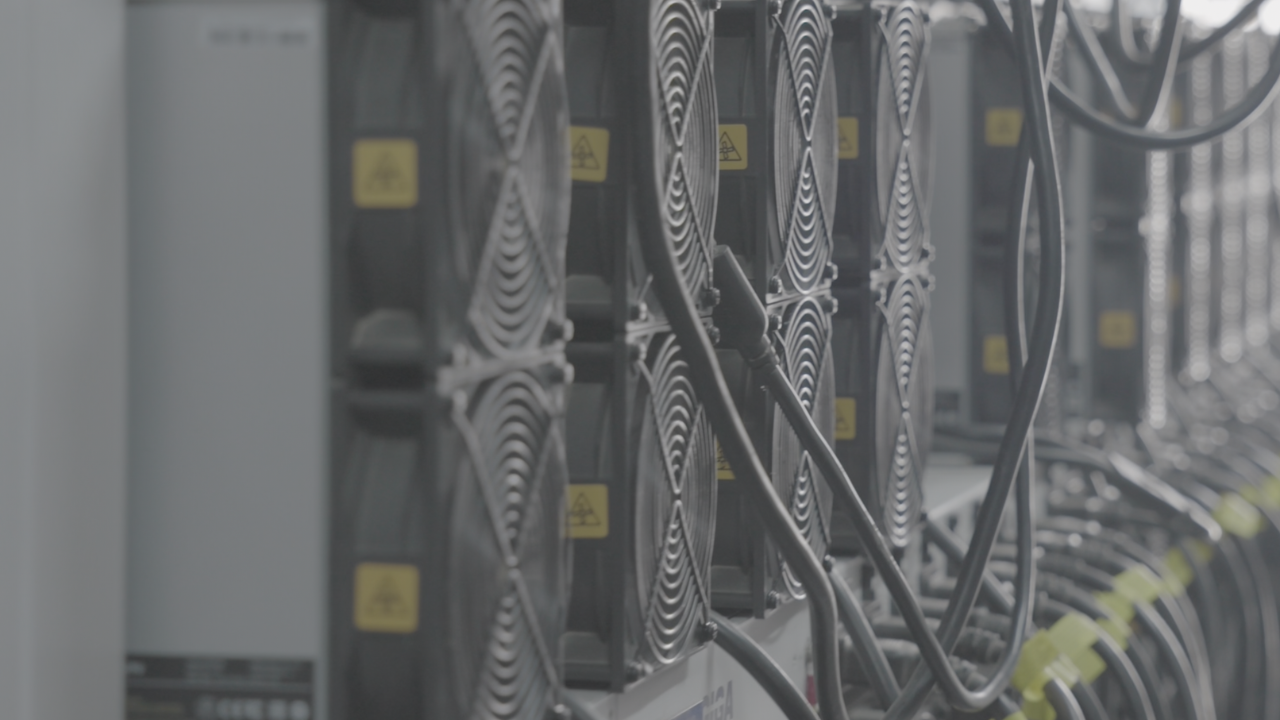
Scrypt ASIC Miners
The L9 launched in May 2024 and replaced the aging L7 as the workhorse of Scrypt mining. It draws 3,150 to 3,570W depending on the variant. Efficiency is the spec that decides how long a machine survives rising difficulty, and the L9 leads its class. Our in-depth Antminer L9 review breaks down the specs, efficiency, and running costs.
You can buy the Antminer L9 from Simple Mining and host it at Iowa facilities running at 95% uptime. Precision billing means you pay only for the hours your machine is hashing. An on-site certified repair center backs every hosted unit with free repair labor and unlimited fan replacements. Hosting also includes a $500 annual parts allowance per unit and Mining Recovery Credits.
Two newer industrial units sit above the L9 on raw output. Bitmain's Antminer L11 pushes 20 to 21 GH/s at about 0.18 J/MH, and the ElphaPex DG2+ delivers 20.5 GH/s at a similar efficiency tier. The older Antminer L7 runs 8.55 to 9.5 GH/s at about 0.36 J/MH and now makes sense only as a discounted used-market buy with cheap power behind it.
Home miners have real options too. The Goldshell Mini-DOGE III produces 700 MH/s at 400W and about 35 dB on a standard 110 to 240V outlet. The ElphaPex DG Home 1 steps up to 2.1 GH/s. These units earn less but run in a living space without industrial power work.
| Class | Models | Hashrate | Power | Noise |
|---|---|---|---|---|
| Industrial ASIC | Antminer L9, Antminer L11, ElphaPex DG2+ | 15 to 21 GH/s | 3,150 to 3,900W | 75+ dB |
| Home ASIC | Goldshell Mini-DOGE III, ElphaPex DG Home 1 | 0.7 to 2.1 GH/s | 400 to 630W | 35 to 55 dB |
Can You Use a GPU to Mine Dogecoin
No. GPU mining for Dogecoin and Litecoin stopped being competitive about a decade ago when Scrypt ASICs arrived. A gaming card produces a tiny fraction of an ASIC's hashrate and burns more in electricity than it earns. Phone apps that promise DOGE mining are simulations or scams. If you want to mine either coin, a Scrypt ASIC is the only path.
Power Supply and Cooling Requirements
Industrial Scrypt miners need a dedicated 220 to 240V circuit and a space that tolerates real noise. Bitmain rates the L9 at 75 dB, and under load it runs closer to 80. The machine also exhausts more than 3,000W of heat, so plan ventilation with an ambient intake under 45°C. Heat is the silent killer in home setups because hot intake air shortens hashboard life. Home units like the Mini-DOGE III sidestep all of this with standard outlets and near-silent fans, and professional hosting sidesteps it for industrial units.
Best Mining Pools for Dogecoin and Litecoin
The leading merged mining pools are LitecoinPool, ViaBTC, F2Pool, and Prohashing. All four pay Dogecoin and Litecoin rewards from the same hashrate, with fees ranging from 2% to 4% depending on the payout model.
A mining pool combines hashrate from many miners and splits rewards in proportion to contributed work. Solo mining is impractical for individuals because a single machine would wait months between blocks. Pool choice affects your payout smoothness and your effective fee, so it deserves a few minutes of thought.
LitecoinPool
LitecoinPool runs a pure pay-per-share model with a 2% fee and has operated since 2011. Every valid share earns credit whether or not the pool finds a block. It has paid LTC and DOGE as separate payouts since February 2024, and other merge-mined Scrypt coins raise its payout rate above a plain zero-fee PPS pool.
ViaBTC
ViaBTC offers two payout methods for Litecoin: PPS+ at a 4% fee and PPLNS at 2%. Merged Dogecoin rewards come standard. Its global server network keeps latency low, which reduces stale shares for miners outside North America.
F2Pool
F2Pool is one of the largest Scrypt pools and merge mines DOGE for every Litecoin miner by default. It charges about 4% on a PPS model and distributes several smaller merge-mined Scrypt coins on top of LTC and DOGE. Confirm the current fee on its site before pointing your miner.
Prohashing
Prohashing takes a different approach. It switches your hashrate to whichever Scrypt coin pays best at any moment and pays out in the coin you choose. Fees vary by payout method from about 1% to 4%. It suits miners chasing maximum dollar revenue rather than a DOGE and LTC stack.
One caution on pool choice: pointing everything at the biggest pool concentrates block production. LitecoinPool has capped its own growth in the past for this reason. Spreading hashrate across operators keeps both networks healthier.
How to Configure Your Miner
Modern Scrypt ASICs need no separate mining software. Every current unit ships with built-in firmware and a web dashboard where you enter your pool details.
The workflow takes about ten minutes. Connect the miner to your router with an Ethernet cable and power it on. Find its IP address in your router's device list and enter that IP in a browser. Log in with the default credentials from the manual and change the password before anything else. Then open the pool configuration page and enter your pool's stratum URL, your worker name, and the worker password.
Add a backup pool in the Pool 2 slot so the miner switches on its own if the primary goes down. Save the settings and let the machine reboot. Within 20 minutes your pool dashboard should show the worker active and submitting shares. Old command-line tools like CGMiner still exist for legacy rigs, but nothing about a current ASIC requires them.
How to Create Dogecoin and Litecoin Wallets
You need one receive address per coin because merged mining pools pay DOGE and LTC as separate payouts. Set up both wallets before you configure the pool, and never mine to an exchange address you don't control.
Hardware Wallets
Ledger and Trezor devices support both Dogecoin and Litecoin and keep private keys offline. They are the right home for mining rewards you plan to hold. Write the seed phrase down and store it away from the machine.
Software Wallets
Dogecoin Core and Litecoin Core are the official full-node wallets, and each requires a blockchain download. Exodus is a lighter multi-coin option that holds both assets in one interface. Software wallets trade some security for convenience, so treat them as a working balance rather than long-term storage. Mining to an exchange adds custody risk on top: frozen withdrawals or a closed account can strand your rewards.
Step-by-Step Guide to Mining DOGE and LTC on One Machine
1. Select Your Mining Hardware
Match the machine to your space and power. An Antminer L9 is the standard pick for serious output and a Mini-DOGE III fits a quiet home setup. Buying through Simple Mining pairs the L9 with hosting. The noise, heat, and electrical work never enter your house.
2. Set Up Your Wallets
Create a Dogecoin wallet and a Litecoin wallet and record both receive addresses. Hardware wallets suit holders and software wallets suit active balances. Confirm each address on the device screen before you paste it anywhere.
3. Join a Merged Mining Pool
Register with a pool that supports merged mining, such as LitecoinPool or ViaBTC. Create a worker and note the stratum URL for your region. Enter your DOGE and LTC payout addresses in the pool's account settings.
4. Configure and Start Your Miner
Enter the pool details in the miner's web dashboard as covered above, add a backup pool, and reboot. Watch the pool dashboard until the worker shows an active hashrate. From then on your job is monitoring temperatures and uptime while the payouts accrue.
Is Mining Dogecoin and Litecoin Profitable
Profitability depends on five inputs: your electricity rate, your machine's efficiency, DOGE and LTC prices, network difficulty, and pool fees. Electricity is the dominant recurring cost, and merged mining improves the revenue side because one power bill earns two coins.
Run your own numbers before buying anything. The CoinWarz Dogecoin calculator and the model pages on ASIC Miner Value update with live difficulty and prices. Plug in your hashrate, your wattage, and your true electricity rate. As a sizing illustration, a 17 GH/s L9 draws about 3,570W and burns about $6.00 per day in power at a $0.07/kWh electricity rate. Revenue against that cost moves with the market, which is why a live calculator beats any fixed figure.
The reward schedules differ in a way that matters for planning. Dogecoin pays a fixed 10,000 DOGE per block on one-minute blocks with no supply cap and no halving, so the reward side never steps down. Litecoin pays 6.25 LTC per block since its August 2023 halving, with the next cut due around 2027. Dogecoin's risk concentrates on price, and a sharp DOGE drawdown is the main thing that turns a thin margin negative. The mitigation is boring and effective: stress test the calculator at prices well below today's before you commit capital, and secure the lowest power cost you can.
Dogecoin and Litecoin Mining vs Bitcoin Mining
Dogecoin and Litecoin run on Scrypt while Bitcoin runs on SHA-256, so the hardware is incompatible in both directions. An Antminer L-series machine cannot mine Bitcoin and an S-series machine cannot mine DOGE or LTC.
The economics differ too. Bitcoin pays 3.125 BTC per block on a halving schedule and commands the deepest mining market, while the Scrypt pair offers the two-coins-one-machine structure covered here. If the Bitcoin side interests you, our explainer on how Bitcoin mining works covers the SHA-256 world in full. Simple Mining hosts both machine types, so miners can run Scrypt and Bitcoin hardware side by side under one operation.
FAQs About Mining Dogecoin and Litecoin
How long does it take to mine 1 Dogecoin?
Pool miners earn fractional DOGE with every accepted share rather than whole coins at intervals. A single industrial ASIC accrues DOGE credits throughout the day, with payout timing set by the pool's minimum threshold. Your hashrate and current network difficulty determine the pace.
How long does it take to mine 1 Litecoin?
Solo mining a full LTC block is impractical for an individual machine because of network difficulty. Pool miners instead earn a proportional share of each 6.25 LTC block reward. Accumulation speed scales with your share of the pool's total hashrate.
Can I mine Dogecoin and Litecoin on a laptop?
No. Laptops lack the hashrate to compete with Scrypt ASICs and the sustained load risks heat damage to the hardware. Apps that advertise phone or laptop DOGE mining are simulations or scams.
Is Dogecoin mining easy for beginners?
Yes, by mining-industry standards. Merged mining pools handle the complexity and the miner's web dashboard replaces command-line software. The real decisions are hardware selection and where the machine will live.
What happens when my mining pool goes offline?
Your miner stops earning until it reconnects. Every modern ASIC dashboard supports backup pool slots that switch over on their own when the primary fails. Configure Pool 2 on day one and an outage costs you minutes instead of a night of downtime.
Start Mining Smarter Today
One machine, two networks, one power bill. That is the entire case for merged mining, and the hardware to act on it is in stock today. At Simple Mining you're able to buy and host a miner at our Iowa facilities with precision billing, 95% uptime, and an on-site certified repair team across an operation managing 9+ EH/s and 150+ MW. Order your L9, point it at a merged pool, and let one rig stack DOGE and LTC for you.