

Antminer L9 Review 2026: Profitability, Specs, & Efficiency
By Josh Heine, Content Strategist at Simple Mining
Updated September 23, 2026Published April 16, 2026
The Bitmain Antminer L9 is the current top of the Scrypt mining stack. It delivers 15 to 17 GH/s for Litecoin and Dogecoin at roughly 0.21 J/MH, replacing the aging L7 fleet that defined Scrypt mining for three years. Efficiency (not raw hashrate) now determines which machines stay profitable as difficulty climbs, and the L9 wins on that metric.
This review covers what the L9 is, what it costs to run, and what it takes to deploy one well.
On this page · 12 sections
- What Is the Bitmain Antminer L9
- Antminer L9 Specifications
- Antminer L9 vs Antminer L7
- How Efficient Is the Antminer L9
- Is the Antminer L9 Profitable
- How to Calculate Antminer L9 ROI
- Does the Antminer L9 Mine Litecoin and Dogecoin Together?
- Setup Requirements for the Antminer L9
- Should You Host or Home Mine the Antminer L9
- Where to Buy the Antminer L9
- FAQs About the Antminer L9
- Maximize Your Scrypt Mining Returns With the Antminer L9
Key Takeaways
- The Antminer L9 delivers 15 to 17 GH/s at roughly 0.21 J/MH, making it Bitmain's most efficient Litecoin and Dogecoin miner.
- Efficiency (not raw hashrate) determines long-term viability as Scrypt difficulty rises, which is why the L9 outperforms the L7 on total cost of ownership.
- Merged mining earns LTC and DOGE simultaneously at full hashrate, with no efficiency loss on either chain.
- Profitability is driven primarily by electricity cost; at $0.07/kWh a 17 GH/s L9 nets about $4 per day (~$120 per month), and it reaches break-even only near $0.12/kWh.
- Professional hosting wins for most L9 buyers because of lower power rates, higher uptime, noise isolation, and in-house repair capability.
What Is the Bitmain Antminer L9
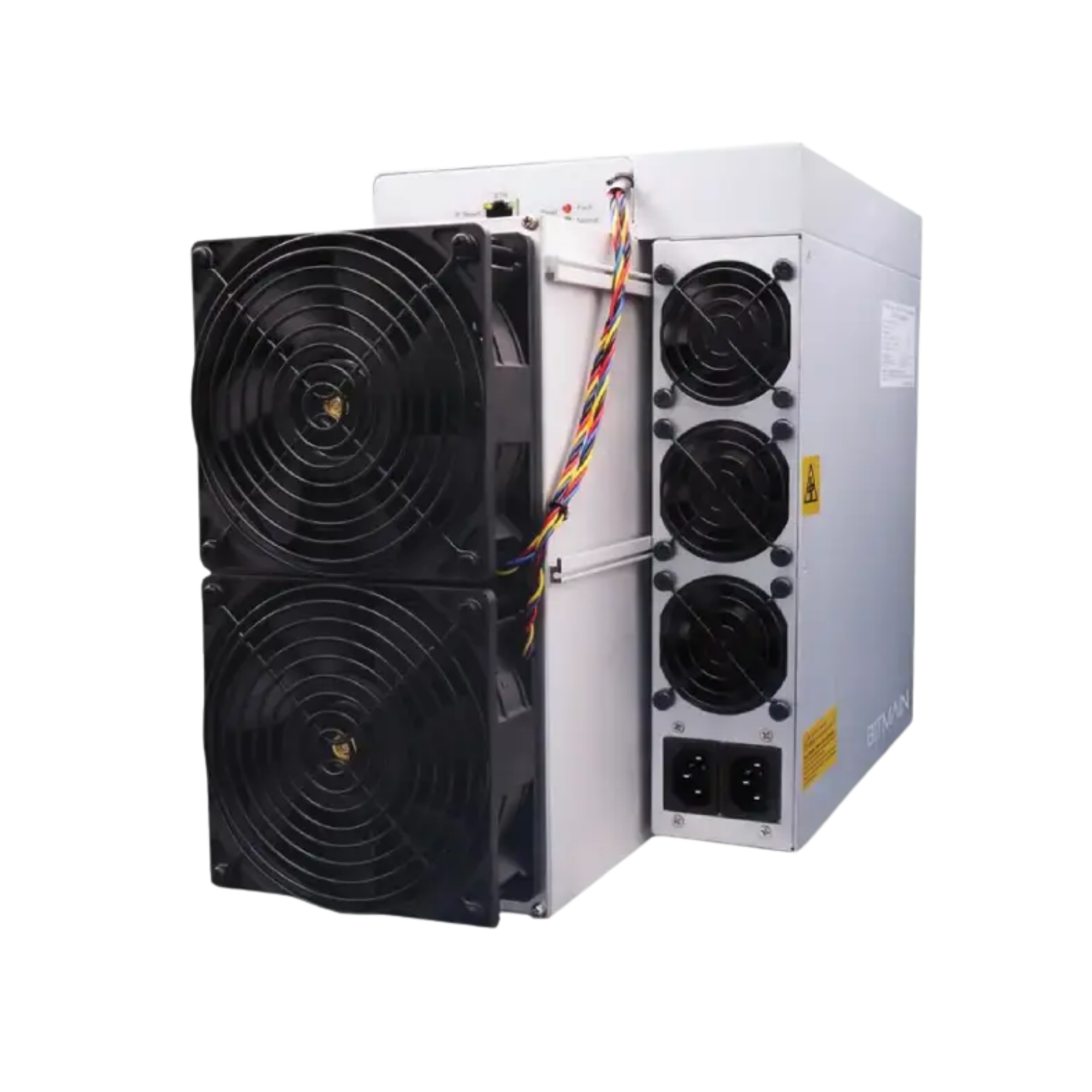
The Bitmain Antminer L9 is a Scrypt-algorithm ASIC miner built for Litecoin and Dogecoin, delivering 15 to 17 GH/s with efficiency near 0.21 joules per megahash. It is Bitmain's direct successor to the L7 and the highest-output Scrypt miner in production.
The L9 launched in May 2024 on a 6nm chip process. Its defining feature is merged mining: one machine secures both the Litecoin and Dogecoin networks at full hashrate, earning rewards from both chains at once. That is a property of the Scrypt algorithm, which Dogecoin adopted to share security with Litecoin.
Antminer L9 Specifications
The L9 ships in three variants. Specs reflect Bitmain's typical values, which fluctuate by ±3% on hashrate and ±5% on power draw.
| Specification | 15 GH/s | 16 GH/s | 17 GH/s |
|---|---|---|---|
| Algorithm | Scrypt | Scrypt | Scrypt |
| Power Consumption | 3,150W | 3,360W | 3,400W |
| Efficiency | ~0.21 J/MH | ~0.21 J/MH | ~0.21 J/MH |
| Chip Process | 6nm | 6nm | 6nm |
| Dimensions | 400 × 195 × 290 mm | 400 × 195 × 290 mm | 400 × 195 × 290 mm |
| Weight | ~14.1 kg | ~14.2 kg | ~16 kg |
| Noise Level | ~75 dB | ~75 dB | ~75 dB |
| Voltage | 220–277V | 220–277V | 220–277V |
| Operating Temp | 5–45°C | 5–45°C | 5–45°C |
Hashrate and the Scrypt Algorithm
Hashrate measures how many hash calculations the miner performs per second. The L9's 17 GH/s (17 billion hashes per second) is the highest production Scrypt output available, which translates to a larger share of pool rewards on Litecoin and Dogecoin networks.
Power Consumption
The L9 draws between 3,150W and 3,400W depending on variant. Power is the largest line item in any mining operation and accounts for 75 to 85 percent of operating cost on most hosted L9s. At $0.07/kWh, a 17 GH/s L9 burns about $5.71 per day. At $0.08/kWh, $6.53 per day.
Efficiency Rating (J/MH)
Efficiency is joules per megahash. Lower is better. The L9's 0.21 J/MH rating is the single spec that predicts long-term viability: as difficulty rises, inefficient miners hit break-even first and get switched off. The L9 survives difficulty increases that push older hardware off the network.
Noise and Cooling Requirements
Bitmain rates the L9 at 75 dB, but that is a lab figure. Under load with four fans at RPM, the unit runs closer to 80 dB in practice, which is the normal gap between a spec sheet and real data center noise levels. That is lawnmower territory and eliminates residential deployment for almost everyone. Thermal output is roughly 3,000W of heat, which requires real ventilation and an ambient intake under 45°C.
Antminer L9 vs Antminer L7
The L9 is not an incremental upgrade. It is a generational jump.
| Feature | Antminer L9 (17 GH/s) | Antminer L7 (9.5 GH/s) |
|---|---|---|
| Hashrate | 17 GH/s | 9.5 GH/s |
| Power Consumption | 3,400W | 3,425W |
| Efficiency | ~0.21 J/MH | ~0.36 J/MH |
| Release | May 2024 | November 2021 |
The L9 produces roughly 79 percent more hashrate than the L7 from the same slot and circuit, at 42 percent better efficiency. If you're on L7s with power under $0.08/kWh, the upgrade math is clear. Above $0.10/kWh the L7 loses money at current LTC and DOGE prices while the L9 still clears a thin margin, and its efficiency makes it the last Scrypt machine standing as difficulty rises.
How Efficient Is the Antminer L9
The L9 is among the most efficient Scrypt ASICs in production, with a 0.21 J/MH rating that extends its useful life as difficulty rises.
Efficiency works like this: every miner on the network gets squeezed as total hashrate grows. The machines with the best J/MH rating survive longest because they produce more revenue per dollar of power burned. The L9 sits in a narrow top tier alongside competing units like the ElphaPex DG1+, with differences between them coming down to noise, form factor, and deployment logistics rather than core economics.
Is the Antminer L9 Profitable
L9 profitability depends on three variables: your electricity rate, Litecoin and Dogecoin prices, and Scrypt network difficulty. Power cost is the largest lever.
As of September 2026, a 17 GH/s L9 grosses about $9.70 per day in combined LTC and DOGE rewards (LTC near $60, DOGE near $0.095). At $0.07/kWh that nets about $4 per day, or about $120 per month, and at $0.08/kWh about $3.15 per day. It reaches break-even only near $0.12/kWh. Because these numbers move daily, run your exact hardware and power rate through a Scrypt profitability calculator like CoinWarz before buying.
As of September 2026 - hashprice, difficulty, and coin prices change daily. Run your own numbers before buying.
Factors That Affect L9 Miner Profitability
- Electricity cost. A 17 GH/s L9 burns ~81.6 kWh/day. Every $0.01/kWh swing is about $0.82 per day, or $300 per year per machine.
- LTC and DOGE prices. Revenue scales directly with coin price.
- Network difficulty. Adjusts on a schedule and trends up as hashrate joins.
- Operational costs. All-in hosting rate, maintenance, and repairs all count.
Break-Even at Different Electricity Rates
Rough math for a 17 GH/s L9 at current hashprice. Treat this as a framework, not a promise.
| Electricity Rate | Daily Power Cost | Approx. Daily Net Profit |
|---|---|---|
| $0.065/kWh | $5.31 | ~$4.40 |
| $0.08/kWh | $6.53 | ~$3.15 |
| $0.12/kWh | $9.79 | About break-even |
The lesson: the L9 rewards cheap power. At $0.065/kWh it throws off cash. At $0.12/kWh it does not. Most U.S. residential rates fall in the problem zone.
What can go wrong: buyers underestimate their true all-in power rate. Residential rates quoted on a utility bill exclude delivery fees, demand charges, and seasonal tiers.
Mitigation: divide last year's total utility charges by total kWh used. That is your real rate.
How to Calculate Antminer L9 ROI
- Find your true electricity rate. Use the full-year average from your utility bill, not the marketing rate.
- Plug in the L9's specs. Use your variant's hashrate and power draw in a Scrypt calculator.
- Let the calculator pull live difficulty. Manual inputs go stale in days.
- Add every operating cost. All-in $/kWh for hosted, plus cooling and maintenance reserves for home.
- Divide to get payback. Purchase price ÷ (net daily profit × 30) = months to payback.
Quick example: at September 2026 prices a $4,600 L9 nets about $4 per day at $0.07/kWh, a simple payback of about 38 months. A sub-3-year payback needs about $4.25 per day, which $0.065/kWh power delivers at today's prices. These numbers move fast, which is why the math needs to be redone whenever you consider buying and why efficiency matters — the L9 stays profitable through conditions that kill older hardware.
Does the Antminer L9 Mine Litecoin and Dogecoin Together?
Yes. The L9 mines LTC and DOGE simultaneously at full hashrate with no performance loss.
Dogecoin adopted Litecoin's Scrypt proof-of-work in 2014 so DOGE miners could piggyback on LTC hashrate. Every valid Litecoin block is also a potential Dogecoin block. Your L9 hashes once and earns rewards from both chains.
Most Scrypt pools (F2Pool, Litecoinpool, Viabtc) enable merged mining by default. DOGE adds a meaningful but minority share of total revenue, not a 2x multiplier despite the marketing language on some sites.
Setup Requirements for the Antminer L9
Power Supply and Electrical Needs
The L9 requires 220–277V AC. A standard 120V outlet will not run it. Most deployments use a dedicated 20A or 30A 240V circuit. A 100-amp 240V subpanel tops out around six L9s with headroom for inrush.
Cooling and Ventilation
The L9 dumps ~3,000W of heat into the room. Ambient intake must stay under 45°C or the unit throttles, then errors, then stops. Size cooling for peak summer conditions, not averages.
Network and Pool Configuration
Ethernet only. Connect the unit, find its IP, open the dashboard, and enter your pool URL, worker name, and password. Set up monitoring because silent failures cost money fast.
Should You Host or Home Mine the Antminer L9
For most L9 buyers, professional hosting is the better path.
Why Professional Hosting Wins for Most L9 Buyers
- Lower power rates. Industrial hosting runs $0.065–$0.08/kWh all-in versus $0.10–$0.15/kWh residential. On an L9, that gap is $600–$2,500 per machine per year.
- Noise and heat handled. You never hear it.
- Uptime discipline. Facilities with on-site technicians run 95%+ uptime because somebody catches failures early.
- Precision billing. At Simple Mining, you pay for actual hashing time, not estimated usage.
- Repair coverage. Simple Mining includes Year 1 Repair Coverage with free repair labor on hosted units.
Across the L-series, the most common field failures are PSUs and single hashboards. Both are recoverable in hours at a repair-capable hosting facility, weeks at a home deployment waiting on manufacturer RMA.
When Home Mining Makes Sense
Home mining can work when you have cheap residential power (at or under $0.08/kWh), existing 240V infrastructure, a detached or soundproofed space, technical comfort with firmware and repair, and a small fleet. Check fewer than three of those, and hosting is the better math.
Where to Buy the Antminer L9
Three channels:
- Direct from Bitmain. Official source. Shipping from China adds cost and time.
- Authorized resellers. Vendors like Cryptominerbros, BT Miners, and Asic Marketplace stock L9s with varying warranty terms.
- Hosting providers with integrated sales. Bundles purchase, shipping, deployment, and first-year repairs.
Simple Mining sells L9s from curated inventory and deploys directly into our Iowa facility. No international shipping, no customs surprises, no waiting.
FAQs About the Antminer L9
What is the expected lifespan of the Antminer L9?
Most ASIC miners run 3 to 5 years of productive life with proper maintenance. Well-cooled units in professional facilities often exceed that. Units running hot or dirty die sooner.
What are common repair issues with the Antminer L9?
Across the L-series, the most common failures are PSUs, fans, and single hashboards. Most are recoverable with board-level repair and original parts. Turnaround at a capable facility is 3 to 7 days versus weeks to months through manufacturer RMA.
How does rising Scrypt difficulty affect L9 profitability?
Difficulty scales with total network hashrate, and every miner earns a smaller share of fixed rewards as it climbs. The L9's 0.21 J/MH efficiency means it stays profitable at difficulty levels that push less efficient hardware below break-even.
Can the Antminer L9 run on a standard 120V outlet?
No. The L9 requires 220–277V on a dedicated circuit. Running it from a 120V outlet will not work and creates a safety hazard.
What firmware options exist for the Antminer L9?
The L9 ships with Bitmain stock firmware, which is the recommended option. Third-party firmware exists for tuning but availability changes and unverified sources carry security risk.
Maximize Your Scrypt Mining Returns With the Antminer L9
The L9 is the right hardware. The infrastructure around it decides whether it makes money.
Simple Mining sells and hosts Antminer L9s from our Iowa facility with all-in power from $0.065 to $0.08/kWh, precision billing, Year 1 Repair Coverage with free repair labor, and a 7-day trial before you commit. Talk to us about L9 hosting to start.