
 Simple Mining x Joe Consorti
Own the production of Bitcoin. The macro trade with a machine behind it.
Joe's audience follows the liquidity and the debt math. Hosted mining turns that view into machines you own, producing Bitcoin at a power cost you know, in a facility you never have to visit.
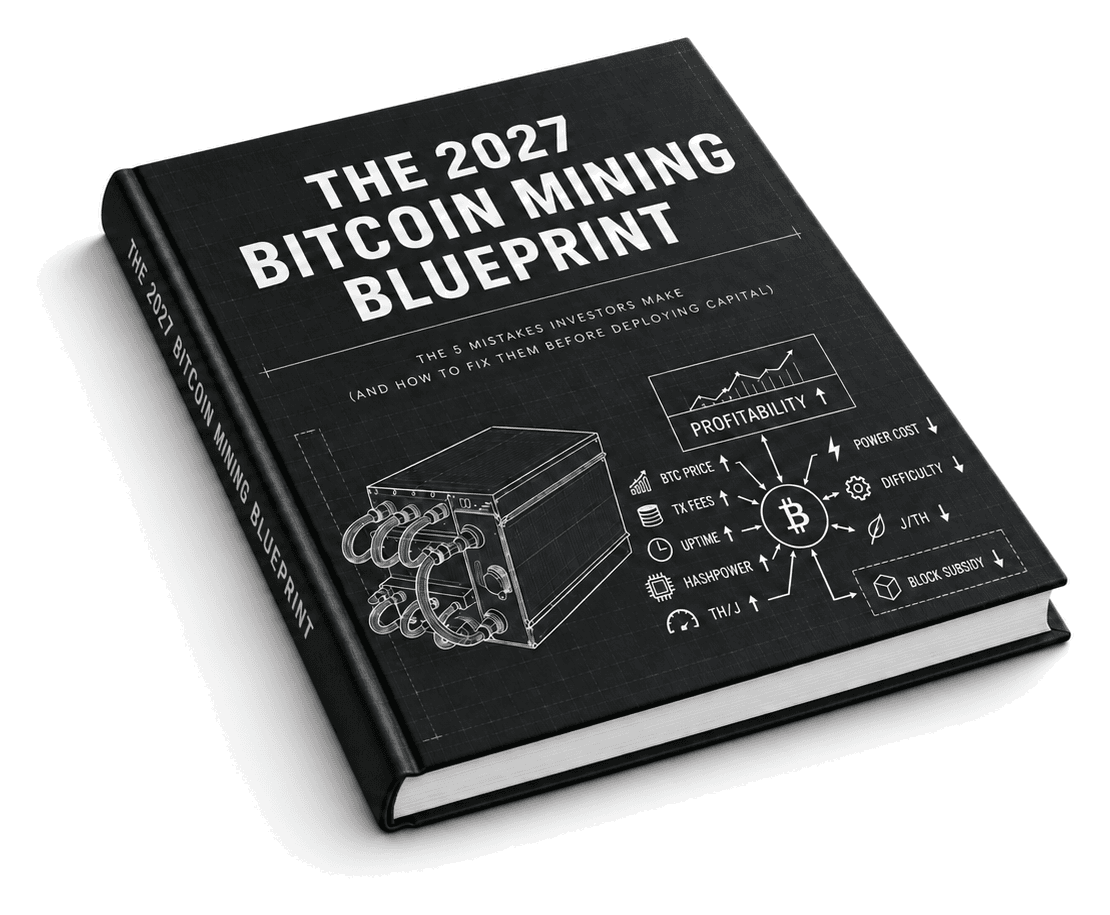
Free 5-lesson email course
The 2027 Bitcoin Mining Blueprint
The 5 mistakes investors make when allocating to Bitcoin mining, and how to fix them before deploying capital.
- One mistake per lesson, with the fix for each
- The numbers to check before buying any machine
- Delivered by email, starting with Lesson 1 today
Lesson 1 arrives in your inbox right away.
Prefer to talk it through? Book a call with the team. Want to try it first? Start with the free 7-day trial.
45,000+
machines managed
1,200+
clients
150 MW
capacity
$0.065
per kWh, hosting from
Inc. 5000 #391 (2026) · #2 in Computers & Technology · 894% three-year growth · BBB accredited · Cedar Falls, Iowa
Why Joe Consorti partnered with Simple Mining
Production, not just exposure
A machine pays you in Bitcoin on the pool's schedule. The dashboard shows every payout, and the coins go to self-custody.
A power rate that holds through the cycle
All-in $0.065 to $0.08 per kWh. Power cost is the line that separates miners who compound from miners who capitulate.
Operator, not intermediary
45,000+ machines managed for 1,200+ clients, 150 MW of capacity, and the #1 rated ASIC repair center in North America. Inc. 5000 honoree in 2025 and 2026, #2 in Computers & Technology.
The macro, with a P&L attached
Bitcoin exposure that pays you to hold it.
Spot Bitcoin is a position in the price. A hosted miner is a position in the price plus a stream of new coins every day, produced from a power cost that is fixed by contract at $0.065 to $0.08 per kWh.
When liquidity expands and price runs, the machine's output is worth more. When it compresses, the low power rate is what keeps the machine running while higher-cost operations switch off. Either way the coins land in a wallet you control.
The hardware is titled to you, runs in our Iowa facilities, and can be sold on the client marketplace when you want to change the position.
How it works
- 1
Purchase a miner
Pick a machine with the team based on your budget and hashrate goals.
- 2
Onboard to the dashboard
Set your payout wallet and see every machine and payout in one place.
- 3
Your miner goes live
Installed, connected, and hashing at a Simple Mining facility in Iowa.
- 4
We run operations
Power, cooling, monitoring, maintenance, and repairs are handled on site.
- 5
Bitcoin gets mined
Pool payouts go to the wallet you control.
- 6
One monthly bill
Electricity, hosting, maintenance, and support on a single invoice.
Want a position sized to your macro view?
Book a short call. We model machine count, hosting cost, and expected payouts on your numbers.
Book my callQuestions Joe Consorti's audience asks
How is mining different from holding spot?
Spot gives you the price. Mining gives you the price plus new Bitcoin produced daily at your power cost. The email course covers when that trade works and when it does not.
What do I own?
Specific ASIC machines, titled to you, in a Simple Mining facility. One monthly hosting bill covers power, cooling, monitoring, and support.
What are the risks?
Bitcoin price, network difficulty, and uptime all move revenue. Power cost is fixed by contract. Lesson 2 of the course is about pricing those risks before you buy.
Where does the Bitcoin go?
To a wallet address you set in the client dashboard. Pool payouts go straight to it. Simple Mining never holds your coins.
What if I want out?
Machines are titled to you. List them on the Simple Mining client marketplace, or have them shipped to you or another host. The exit does not depend on us buying them back.
Hosted mining involves risk. Miner revenue varies with Bitcoin price, network difficulty, transaction fees, uptime, and operating costs.
This page is built for Joe Consorti's audience and is used for partner attribution.