

What is Curtailment and How Does It Work?
By Josh Heine, Content Strategist at Simple Mining
Updated August 4, 2026Published June 22, 2024
Curtailment is the intentional reduction of electricity generation or consumption to maintain balance on the power grid. In Bitcoin mining, it means powering down operations when grid conditions require it.
For miners, curtailment isn't a disruption to fear. It's a powerful cost-saving tool that helps maintain more competitive hosting rates. It can also extend equipment life. This guide covers the types of curtailment and why it happens. You'll learn who initiates it and how to evaluate a hosting provider's curtailment policies.
On this page · 10 sections
- What Does Curtailment Mean
- Types of Curtailment
- Why Curtailment Happens
- Who Initiates Curtailment
- How Curtailment Works in Bitcoin Mining
- How Curtailment Affects Mining Profitability
- Benefits of Curtailment for Bitcoin Miners
- What to Look for in Curtailment Policies
- How Simple Mining Handles Curtailment
- FAQs About Curtailment
Key Takeaways
- What it is: The intentional reduction of power use to balance the grid.
- The Benefit: Bitcoin miners turn downtime into a cost-saving tool by avoiding peak energy prices and lowering overall operational expenses.
- Equipment Health: Periodic pauses during curtailment can actually extend the lifespan of ASIC hardware.
- The Simple Mining Edge: Our precision billing ensures you only pay for your actual uptime and never for energy you didn't consume.
What Does Curtailment Mean
Curtailment is the intentional reduction of electricity generation or consumption to keep supply and demand balanced on the power grid. The word comes from "curtail," meaning to cut something short before it reaches its planned end.
You'll encounter this term in different contexts. Mortgage lenders use it to describe extra loan payments. Travel insurers reference it when trips get cut short. For Bitcoin miners, energy curtailment is the definition that matters.
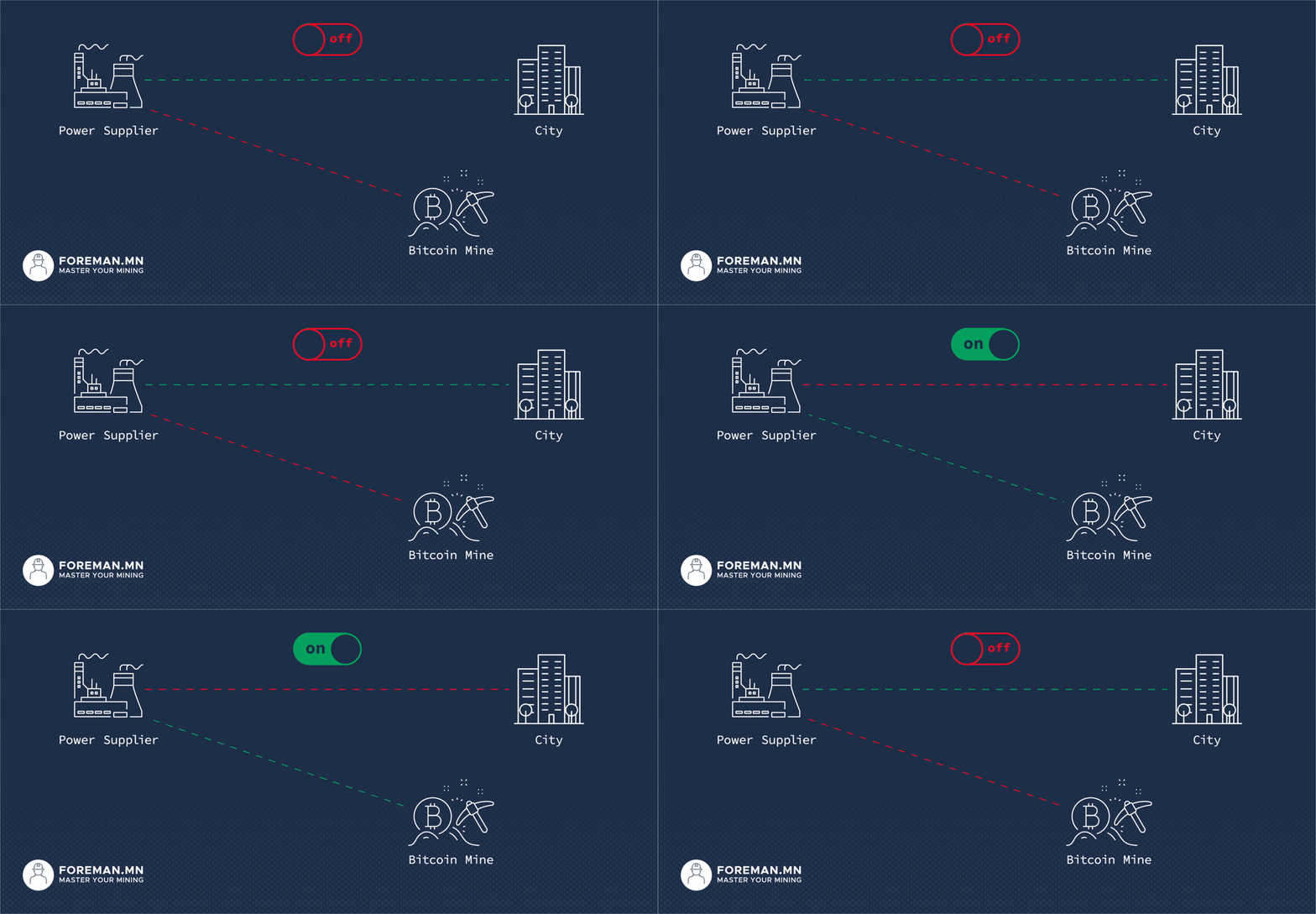
The power grid operates like a real-time balancing act. Electricity generated at any moment has to match electricity consumed. When that balance tips too far in either direction, curtailment restores equilibrium.
- Generation curtailment: Power plants or renewable sources reduce their output when supply exceeds demand
- Load curtailment: Large energy consumers reduce their power usage when the grid faces stress
Types of Curtailment
Curtailment takes four main forms. Each one affects mining operations in a different way.
Partial Curtailment
Partial curtailment reduces output or consumption without a full stop. Your miners might run at 50% capacity instead of full power. Operations continue at a lower intensity.
Full Curtailment
Full curtailment means a complete shutdown. All activity stops until grid conditions stabilize. For a mining facility, this means powering down every ASIC until the event ends.
Voluntary Curtailment
Operators sometimes choose to reduce their load without being asked.
Economics drive the decision. During peak demand periods, electricity prices can spike well above normal rates. Pausing operations when power costs $0.15/kWh instead of running at $0.07/kWh makes financial sense. Some demand response programs also pay participants for their flexibility.
Involuntary Curtailment
Grid operators or regulatory authorities can mandate curtailment when conditions require it. This happens during emergencies or extreme weather events. It can also occur when grid stability is at risk. When the Independent System Operator (ISO) calls, large energy consumers respond.
Why Curtailment Happens
Curtailment happens when the power grid loses balance between electricity supply and demand. Several factors can trigger an event.
- Grid congestion: Too much power flowing through limited transmission lines creates bottlenecks
- Oversupply: Renewable sources like wind and solar don't produce on demand. A sunny and windy afternoon can generate more electricity than the grid absorbs.
- Low demand periods: Nights and weekends see reduced electricity consumption. If generation stays constant while demand drops, something has to give.
- Transmission constraints: Power might be available but unable to reach where it's needed due to infrastructure limitations
- Emergency conditions: Extreme weather or equipment failures can force rapid reductions. Unexpected grid instability has the same effect.
The common thread is maintaining the balance that keeps the lights on for everyone.
Who Initiates Curtailment
Grid operators and utilities can trigger curtailment. Facility operators can too, depending on the circumstances.
| Entity | Role | Curtailment Type |
|---|---|---|
| Independent System Operators (ISOs) | Manage regional grid operations | Involuntary |
| Regional Transmission Organizations (RTOs) | Coordinate electricity transmission | Involuntary |
| Utilities | Deliver power to end users | Either voluntary or involuntary |
| Facility operators | Large energy consumers | Voluntary |
Grid operators like ERCOT in Texas or PJM in the Mid-Atlantic have the authority to mandate curtailment when grid stability requires it. They monitor supply and demand in real-time and issue signals when action is needed.
Facility operators like Bitcoin mining data centers often participate in demand response programs. Simple Mining manages these grid agreements to keep hosting costs stable and competitive for our clients.
How Curtailment Works in Bitcoin Mining
Bitcoin mining facilities can power down and restart within minutes. This makes them ideal partners for grid stability programs. A manufacturing plant can't stop mid-production, but a mining facility can pause and resume without damaging equipment or disrupting processes.
- Demand response programs: Miners enter agreements to reduce power consumption when the grid signals a need. In return, they receive payments for their flexibility.
- Flexible load: ASIC miners switch off and on in minutes. That speed is rare among large energy consumers.
- Grid partnership: Mining facilities act as shock absorbers for the grid. They ramp down during stress and ramp up when excess power is available.
Some operations locate near renewable energy sources to capture curtailed power that would go to waste. When a wind farm generates more than the grid can handle, nearby miners absorb that excess at favorable rates.
From an operator's perspective, the process is straightforward. A signal comes in from the grid operator or our internal monitoring flags a price spike. Machines power down within minutes. When conditions stabilize, everything comes back online. The entire cycle happens without physical intervention at the facility.
How Curtailment Affects Mining Profitability
Curtailment creates a trade-off. You lose hashrate and potential Bitcoin earnings during downtime. You can also gain in other ways.
| During Curtailment | Impact |
|---|---|
| Hashrate | Temporarily reduced or paused |
| Electricity costs | Reduced or eliminated |
| Equipment wear | Reduced during downtime |
The math is often more favorable than it appears. A 4-hour curtailment event might cost a small amount of BTC in revenue, but it also eliminates your electricity costs for those hours. Because Simple Mining participates in demand response programs at the institutional level, we can maintain more competitive and stable hosting rates for all our clients.
With precision billing, you only pay for actual uptime. Curtailment events do not result in paying for electricity you did not use, which ensures your costs align perfectly with your actual operation
Investors should view curtailment as a strategic pause rather than pure downtime. When a host manages these events effectively, the reduction in power expenses protects your bottom line during periods of grid stress or high energy prices.
Benefits of Curtailment for Bitcoin Miners
Curtailment can generate revenue and reduce costs. It also extends equipment life when managed well.
Demand Response Revenue
Grid operators provide incentives for flexibility. When we reduce the facility load during peak periods, we provide a valuable service to the grid. These institutional benefits allow us to pass savings onto you through lower base electricity rates.
Reduced Electricity Costs
Electricity prices aren't constant. They spike during peak demand and drop during low-demand periods.
Pausing operations when prices are highest and running when they're lowest optimizes your cost structure. You're not mining Bitcoin at any price. You're mining it at the best possible rates.
Extended Equipment Lifespan
ASIC miners generate significant heat and run under constant stress. Periodic downtime during curtailment gives equipment a break. Those brief pauses add up over months and years of operation, reducing wear on components like fans and hashboards.
What to Look for in Curtailment Policies
A hosting provider's curtailment practices determine whether downtime events cost you money or save it. Not all providers handle these events the same way.
Precision Billing During Curtailment
You shouldn't pay for electricity when your miners aren't running. Look for providers that bill based on actual uptime rather than contracted capacity. This prevents curtailment from becoming a double penalty where you lose mining revenue and still pay for power you didn't consume.
Flexibility to Pause Operations
Beyond grid-mandated curtailment, some providers offer the ability to pause during unfavorable market conditions. This flexibility lets you respond to hashprice drops or difficulty spikes that make mining unprofitable for a period.
How Simple Mining Handles Curtailment
Simple Mining pairs precision billing with pause-friendly hosting to keep curtailment transparent and fair.
Precision billing means you only pay for actual uptime. Our fleet averages 95%+ uptime across facilities. When curtailment happens, your costs reflect reality rather than contracted capacity.
You can monitor your miners through your customer dashboard, with a direct line to real support when you have questions.
Iowa's stable grid and low natural disaster risk also mean curtailment events happen less often than in regions with heavier grid congestion. Our facilities sit on a ~60% renewable energy mix, which creates favorable conditions for long-term uptime.
FAQs About Curtailment
Is curtailment temporary or permanent?
Curtailment is almost always temporary. Events last anywhere from minutes to several hours depending on grid conditions. Once the grid stabilizes, operations resume.
Do miners still pay for electricity during curtailment?
With a precision billing model, miners only pay for actual uptime. If your miners are curtailed, you should not be charged for that downtime. Verify your provider's billing practices before signing an agreement.
How often does curtailment occur at Bitcoin mining facilities?
Frequency varies based on location and local grid conditions. Facilities in regions with high renewable penetration or transmission constraints may see more events. Well-managed facilities in stable grid regions see curtailment a few hours per month at most.
Can Bitcoin miners opt out of curtailment programs?
Some demand response programs are voluntary. Others may be mandatory as part of the hosting agreement or local grid requirements. Review your provider's policies to understand your obligations and options.
What does curtailment mean in travel insurance?
In travel insurance, curtailment refers to coverage for cutting a trip short due to a covered reason such as illness or family emergency. The insurer reimburses unused portions of prepaid travel expenses. This usage is unrelated to energy curtailment but shares the core meaning of "cutting something short."
Curtailment is a feature of the grid, not a flaw in your operation.
Ready to host with a provider that handles curtailment the right way? Start your free 7-day trial →