

What Is an ASIC? How Bitcoin Mining Hardware Works
By Josh Heine, Content Strategist at Simple Mining
Updated October 12, 2026Published May 30, 2024
Your computer cannot mine Bitcoin profitably. An ASIC, short for application-specific integrated circuit, is a chip built for exactly one job. In Bitcoin's case that job is solving the SHA-256 algorithm that secures the network, and the machines built around these chips are what the industry calls miners. Efficiency, measured in joules per terahash, is what separates a machine that pays for itself from one that drains.
This guide covers what an ASIC is, why Bitcoin mining evolved to require specialized chips, and which factors decide whether a machine earns or loses money. If you are comparing specific models, our guide to the best Bitcoin miners ranks the current generation on efficiency. If you are ready to buy, you can browse current-generation Bitcoin miners in stock.
Key Takeaways
- An ASIC (application-specific integrated circuit) is a chip designed for a single calculation. Bitcoin ASICs run SHA-256, and a modern unit delivers millions of times more hashing power than general-purpose hardware.
- Energy efficiency in joules per terahash (J/TH) determines your electricity bill. Current-generation miners range from 9.5 J/TH (S23 Hydro) to 17.5 J/TH (base S21). The S9 consumed 98 J/TH.
- Bitcoin mining shifted from CPUs (2009) to GPUs (2010) to ASICs (2013) because specialized hardware outperforms general-purpose processors by orders of magnitude for SHA-256.
- Profitability depends on five factors: hashrate, J/TH efficiency, electricity cost, hardware price, and cooling infrastructure. Raw computational power alone means nothing without efficiency.
- Repair access and manufacturer track record protect your uptime. Vertically integrated hosting with on-site repairs eliminates the weeks-long shipping delays that turn minor failures into major revenue losses.
What Is an ASIC?
An ASIC is an integrated circuit built for one purpose rather than general computing. The acronym stands for Application-Specific Integrated Circuit. In Bitcoin mining that purpose is solving the cryptographic puzzles that validate transactions. Unlike processors built to handle various computing functions, ASIC hardware contains circuits engineered to compute one hashing algorithm. For Bitcoin, that means SHA-256.
The first commercial Bitcoin ASIC reached the market in 2013 when Canaan Creative released the Avalon model. That same year, Bitmain launched the Antminer S1. That product line now dominates the industry. Current models like the Antminer S21 series and the newer S23 Hydro represent over a decade of chip optimization focused on Bitcoin mining performance.
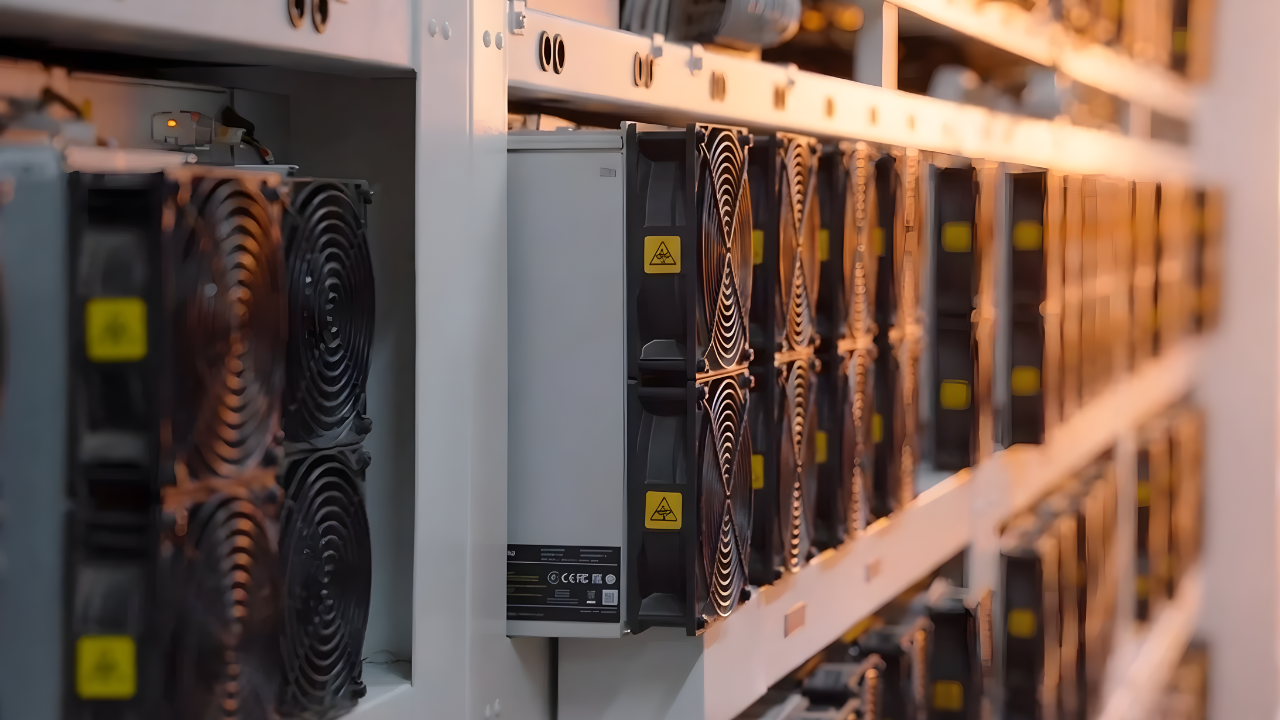
ASIC Crypto Miner vs General-Purpose Hardware
General-purpose CPUs and GPUs handle diverse tasks (rendering graphics, running spreadsheets, training AI models). An ASIC crypto miner strips away that versatility. Every circuit serves one function: generating hashes at maximum speed while minimizing electricity use.
The performance gap is enormous. The Antminer S21 XP generates 270 TH/s using air cooling alone. The S23 Hydro pushes 563 TH/s with liquid cooling. High-end GPUs achieve roughly 85 MH/s for compatible algorithms. ASICs deliver millions of times more computational power for SHA-256.
That specialization creates both the performance advantage and the operational risk. Once an ASIC's target algorithm becomes unprofitable, the hardware has no alternative use. GPUs retain resale value because users can repurpose them for gaming or other tasks. ASICs cannot switch.
Key Components of an ASIC Mining Rig
Physical construction varies between models, but core components remain consistent across manufacturers.
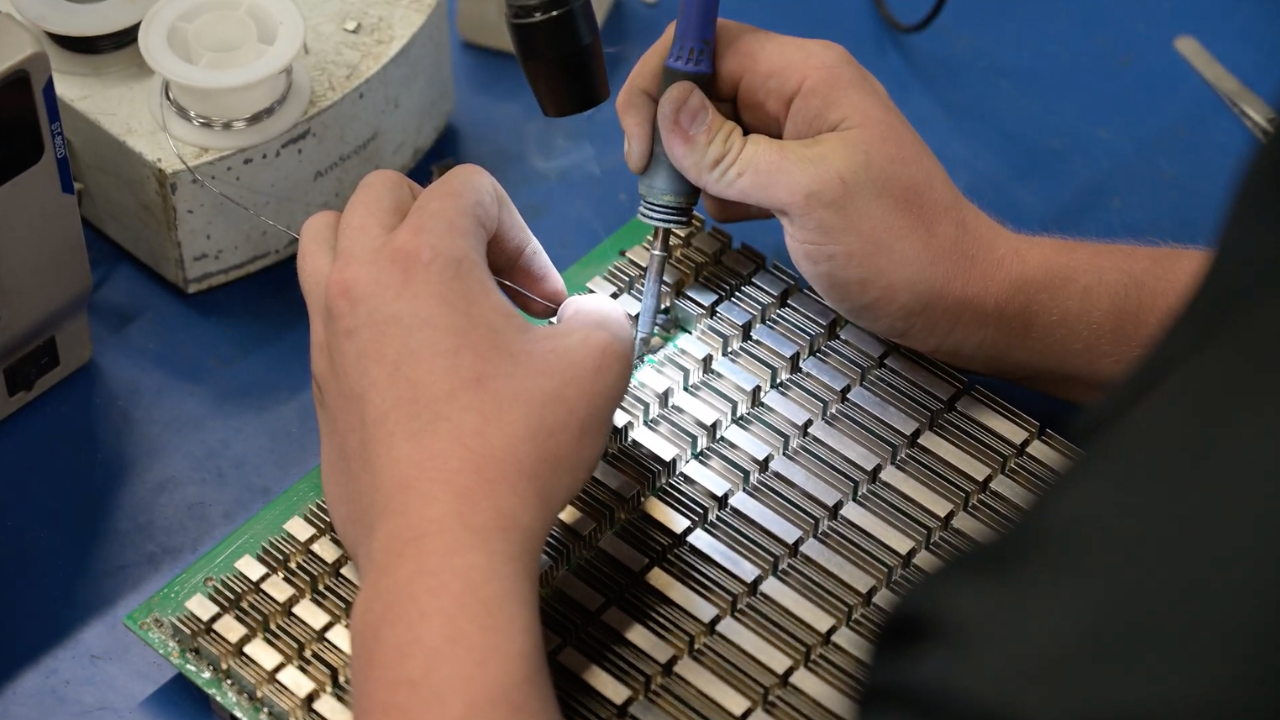
An ASIC mining rig contains multiple identical chips mounted on circuit boards called hashboards. Quantities range from dozens to over a hundred chips per unit. More chips mean higher hashrate through parallel computation. A metal casing houses the power supply unit (PSU), which feeds electricity to the chips. Cooling systems occupy significant space because hashing generates substantial heat. Communication interfaces connect the device to Bitcoin mining pool software.
Most units arrive ready to operate. Plug the device into power and a network connection, configure your pool settings, and mining begins. This simplicity contrasts with GPU rigs that require assembly, driver configuration, and ongoing adjustments.
Why Did Bitcoin Mining Shift from CPUs to ASICs?
Bitcoin mining evolved from CPUs to ASICs because specialized chips outperform general-purpose processors by orders of magnitude for SHA-256 calculations. Each hardware generation delivered 100x to 1,000x performance improvements. The economics forced every miner to upgrade or stop earning.
CPU Mining: The Original Design (2009)
Bitcoin launched with CPU mining in 2009. Satoshi Nakamoto designed the network assuming one CPU equaled one vote in the proof-of-work system. Hash rates hit approximately 2 MH/s. Anyone with a desktop computer could mine blocks and earn the 50 BTC reward. Hal Finney received Bitcoin's first transaction on January 12, 2009.
The economics were simple. Electricity cost almost nothing. Hardware cost almost nothing. Competition barely existed.
GPU Mining: 50x Performance Jump (2010)
Graphics cards entered Bitcoin mining in October 2010 when GPU mining code became available. GPUs delivered 50 to 100 times the speed of CPUs through parallel processing. Hash rates jumped to 400 MH/s. The performance gap made CPU mining obsolete overnight. Miners who stayed on CPUs earned nothing.
The ASIC Arrival: The Final Transition (2013)
Field-Programmable Gate Arrays (FPGAs) appeared briefly in 2011, delivering 5 GH/s with three times less power draw than GPUs. That improvement lasted months. ASICs arrived in 2013. The first Avalon ASIC achieved 60 GH/s. Modern models like the Antminer S21 Pro exceed 230 TH/s. Network difficulty spiked. GPU mining became unprofitable for Bitcoin.
The takeaway: specialized chips always beat general-purpose processors for specific tasks. Only ASICs remain viable for Bitcoin mining.
| Era | Year | Hardware | Typical Hashrate | Approx. Efficiency |
|---|---|---|---|---|
| CPU | 2009 | Desktop processor | 2 MH/s | ~10,000,000 J/TH |
| GPU | 2010 | Graphics card | 400 MH/s | ~500,000 J/TH |
| FPGA | 2011 | Field-programmable array | 5 GH/s | ~100,000 J/TH |
| Early ASIC | 2013 | Avalon / Antminer S1 | 60–200 GH/s | ~1,000 J/TH |
| Mid-Gen ASIC | 2017 | Antminer S9 | 14 TH/s | 98 J/TH |
| Current ASIC | 2024–2026 | S21 XP / S23 Hydro | 270–563 TH/s | 9.5–13.5 J/TH |
How Do ASIC Miners Convert Electricity into Bitcoin?
Your ASIC receives work from a mining pool, runs billions of SHA-256 calculations per second, and earns a proportional share of block rewards based on its hashrate contribution to the network.
The machine combines transaction data with a nonce value, runs SHA-256, and produces a 64-character hexadecimal output. Finding a valid hash below the network target requires billions of attempts per second. The nonce field stores numbers up to roughly 4.5 billion. When exhausted, the extra nonce field provides additional values. A modern miner cycles through these possibilities in seconds. The faster your machine operates, the more lottery tickets you buy per hour.
Hashrate: Your Share of Network Rewards
Hashrate measures SHA-256 calculations per second. Current Bitcoin ASICs operate in terahashes per second (TH/s). The S21j XP Hydro delivers 495 TH/s. The S23 Hydro pushes 563 TH/s. Higher hashrate means a larger proportional share when your pool finds a block.
Bitcoin network hashrate currently runs near 1,026 EH/s on a 7-day average, and daily readings vary by measurement source. Your individual contribution determines your share of the reward. A 500 TH/s machine represents a fraction of total network power. That fraction translates to expected earnings after pool fees. Tracking your revenue per terahash is what miners call hashprice.
Power Efficiency: The Make-or-Break Metric
Joules per terahash (J/TH) determines your electricity cost per unit of mining power. Lower numbers mean higher margins. The S9 (2017 vintage) consumed 98 J/TH. The S21 Pro achieves 15 J/TH. The S23 Hydro breaks the sub-10 barrier at 9.5 J/TH.
That efficiency gap matters in dollar terms. At $0.07/kWh, an S19 Pro (~3,250W) costs roughly $164 per month to operate. An S21 Pro (3,510W) produces more hashrate at 15 J/TH and costs about $177 per month but delivers 234 TH/s instead of 110 TH/s. Revenue per dollar of electricity spent is the metric that matters.
ASIC chips now use 5nm process nodes. Smaller transistors deliver more computations per watt. Custom analog designs replaced standard digital approaches, creating the efficiency levels that separate profitable operations from expensive donations to the network.
What Determines ASIC Miner Profitability?
Five factors separate profitable miners from expensive paperweights: hashrate, J/TH efficiency, electricity cost, hardware price, and cooling infrastructure. Purchase decisions based on specifications alone miss the operational realities that determine whether a machine earns or loses money over its lifespan.
The best Bitcoin miners target efficiency ratings under 15 J/TH. The S23 Hydro leads at 9.5 J/TH. Air-cooled flagships like the S21 XP achieve 13.5 J/TH. Anything above 20 J/TH struggles to profit at electricity rates over $0.06/kWh.
| Model | Hashrate | Efficiency | Power Draw | Monthly Electric Cost ($0.07/kWh) |
|---|---|---|---|---|
| Antminer S19 Pro | 110 TH/s | 29.5 J/TH | 3,245W | ~$164 |
| Antminer S21 | 200 TH/s | 17.5 J/TH | 3,500W | ~$176 |
| Antminer S21 Pro | 234 TH/s | 15 J/TH | 3,510W | ~$177 |
| Antminer S21 XP | 270 TH/s | 13.5 J/TH | 3,645W | ~$184 |
| S21j XP Hydro | 495 TH/s | 12 J/TH | 5,940W | ~$299 |
| S23 Hydro | 563 TH/s | 9.5 J/TH | 5,349W | ~$270 |
Monthly costs calculated at: Power (kW) × 720 hours × $0.07/kWh.
The table reveals a pattern. The S19 Pro and the S21 Pro cost similar amounts per month to run, but the S21 Pro delivers more than double the hashrate. Over 24 months, that efficiency gap compounds into thousands of dollars in lost revenue per machine.
Upfront Cost vs Lifetime Returns
Purchase price matters less than total cost of ownership. A cheaper used S19 at 29.5 J/TH may cost less upfront, but it burns more electricity per terahash than an S21 Pro at 15 J/TH. Over two years of continuous operation, the premium machine recovers its higher purchase price through lower electricity bills and higher hashrate.
Run the math before buying. The break-even calculation depends on your electricity rate and expected operating period. Operators who skip this step end up subsidizing the network with donated hashrate.
Heat Output and Cooling Infrastructure
Every watt consumed converts to heat. A 3,500W miner generates roughly 12,000 BTU/h. Poor cooling kills chips through thermal stress. Effective cooling extends hardware life and maintains peak performance.
Air-cooled miners require substantial ventilation and produce 75+ dB of noise, and the data center noise levels that figure implies at a property line drive the facility requirement more than the heat does. Hydro-cooled models run quieter (~50 dB) and cooler but need liquid cooling infrastructure with pumps, radiators, and plumbing. The cooling method determines your facility requirements. With Bitcoin miner hosting, this is your provider's concern.
Manufacturer Track Record and Repair Access
Two manufacturers dominate: Bitmain (Antminer series) and MicroBT (Whatsminer series). Both offer established parts channels and repair documentation. Availability of replacement components determines downtime duration when failures occur.
Operator reality: repair delays stretch from days to weeks based on parts availability. Machines from established manufacturers with active production lines get fixed faster than discontinued models. Exotic models with theoretical efficiency advantages become expensive mistakes when parts vanish from the supply chain. Buy from manufacturers with proven repair networks and ongoing production.
Simple Mining operates one of the largest Bitmain-certified ASIC repair centers in North America, with full-time technicians performing component-level diagnostics and micro-soldering on-site. When a hashboard fails at 2 AM, the difference between a local repair bench and a six-week overseas shipping queue is the difference between a minor inconvenience and a month of lost revenue. That repair infrastructure is one reason why hosted mining at a vertically integrated facility produces better uptime than self-hosting for most investors.
FAQs
How long does it take to mine 1 Bitcoin with an ASIC?
Years, for any single machine. A current-generation flagship is on the order of a decade, and an older S19-class unit is several times longer than that, because the timeline scales with your share of network hashrate and that share shrinks as difficulty rises. A single machine earns only a tiny fraction of each block reward, so individual miners join Bitcoin mining pools for proportional payouts rather than waiting to solve a block alone. Our cost to mine a Bitcoin calculator gives the current figure for any machine, and our full guide covers how long it takes to mine 1 Bitcoin by hardware tier.
Can you still profit mining Bitcoin with ASICs?
ASIC mining can still be profitable, but success depends on three factors: access to low-cost electricity, investment in efficient hardware (15 J/TH or better), and proper cooling infrastructure. Operators with all-in power costs under $0.08/kWh and current-generation equipment have the strongest margins. Simple Mining offers all-in hosting at $0.065–$0.08/kWh with precision billing, and miners purchased from us include 12 months of repair coverage: free repair labor, unlimited fan replacements, and a $500 annual parts allowance.
What are the most important specs when choosing an ASIC miner?
The key factors are energy efficiency (J/TH), hashrate (TH/s), upfront cost versus expected lifetime returns, cooling requirements, and manufacturer reputation. Efficiency is the most critical factor because it controls your ongoing electricity cost per unit of mining power. A lower J/TH rating means higher margins on every terahash you produce.
Why can't I just mine Bitcoin with my computer?
Your computer uses a general-purpose CPU or GPU that handles many tasks but excels at none for SHA-256 hashing. A modern ASIC delivers millions of times more SHA-256 computational power per watt than a desktop processor. The electricity cost alone would exceed any Bitcoin you could mine with consumer hardware.
Start With Efficiency, Then Choose a Machine
Efficiency separates the machines that earn from the machines that drain. Bitcoin mining is a business of converting electricity into sound money, and J/TH is the conversion rate that determines your margin. Evaluate hashrate, efficiency, electricity cost, and repair access before committing capital to any ASIC.
Simple Mining sells, hosts, and repairs thousands of Bitcoin miners at its Iowa data centers. Explore current-generation Bitcoin miners or schedule a call to discuss hosted mining with all-in rates starting at $0.065/kWh.