

Understanding the Difference Between Crypto and Bitcoin
By Josh Heine, Content Strategist at Simple Mining
Updated June 22, 2026Published December 17, 2025
People use "Bitcoin" and "crypto" as synonyms. This is a mistake. The difference between crypto and Bitcoin matters for your investment thesis and your portfolio construction. Bitcoin is a decentralized digital currency with a specific monetary purpose. Crypto, on the other hand, is a catch-all term for thousands of digital tokens with varying functions. Understanding how crypto and Bitcoin differ shapes every allocation decision you make in this market.
Key Takeaways
- Bitcoin is a decentralized digital currency with a 21 million coin hard cap and a store of value thesis. Crypto is a broader catch-all term for 15,000+ active digital tokens with varying purposes.
- Bitcoin uses Proof-of-Work requiring physical mining hardware. Most newer cryptocurrencies use Proof-of-Stake and require no specialized equipment. This is the fundamental technical distinction.
- Bitcoin functions as money with a macro investment thesis. Altcoins function as technology bets with venture capital risk profiles. Analyze them with different frameworks.
- Bitcoin dominance hovers around 57-60% of total crypto market capitalization as of late 2025. It remains the anchor asset for the entire digital asset ecosystem.
- Bitcoin mining offers a way to accumulate BTC through infrastructure ownership rather than exchange purchases. Hosted mining reduces operational complexity while preserving hardware exposure.
What Is Bitcoin?
Bitcoin is a decentralized digital currency that operates without banks or governments. Satoshi Nakamoto launched the network in January 2009. The protocol has one purpose: transfer and store value across the internet without intermediaries.
Think of Bitcoin as digital gold with a fixed supply schedule. The protocol caps total supply at 21 million coins. No committee can change this number. No central bank can print more. This hard cap makes Bitcoin a store of value in a world of infinite money printing.
Bitcoin functions as money. It has no CEO. It has no marketing team. It has no roadmap of new features. The protocol optimizes for one thing: being the most secure and predictable monetary network in existence. This narrow focus separates Bitcoin from everything else in the crypto market.
The network runs on Proof-of-Work consensus. Physical machines called ASICs compete to solve cryptographic puzzles. The winner adds the next block to the blockchain and earns new Bitcoin. This process converts electricity into monetary security. The energy expenditure secures the network against attacks and manipulation.
What Is Crypto?
Crypto refers to the entire universe of digital assets built on blockchain technology. The terminology causes confusion because Bitcoin is a cryptocurrency. Yet the crypto market contains thousands of projects with purposes that differ from Bitcoin.
As of late 2025, major tracking platforms list around 15,000 active cryptocurrencies. Millions of smart contracts and tokens exist across various networks. Most have zero trading volume or utility. The number of active and meaningful projects remains far smaller than the raw token count suggests.
So, what’s the difference between crypto and Bitcoin? Bitcoin is money. Most altcoins are tech experiments.
The crypto market includes many categories. Utility tokens power decentralized applications. Stablecoins peg their value to the US dollar. Governance tokens grant voting rights in protocols. Meme coins exist for speculation and entertainment. Smart contract platforms enable developers to build applications on shared infrastructure.
Bitcoin dominance measures Bitcoin's share of total crypto market capitalization. This metric hovers around 57-60% as of late 2025. When Bitcoin launched in 2009, its dominance was 100%. The creation of altcoins diluted this share over time. Yet Bitcoin remains the anchor asset that sets the tone for the entire digital asset ecosystem.
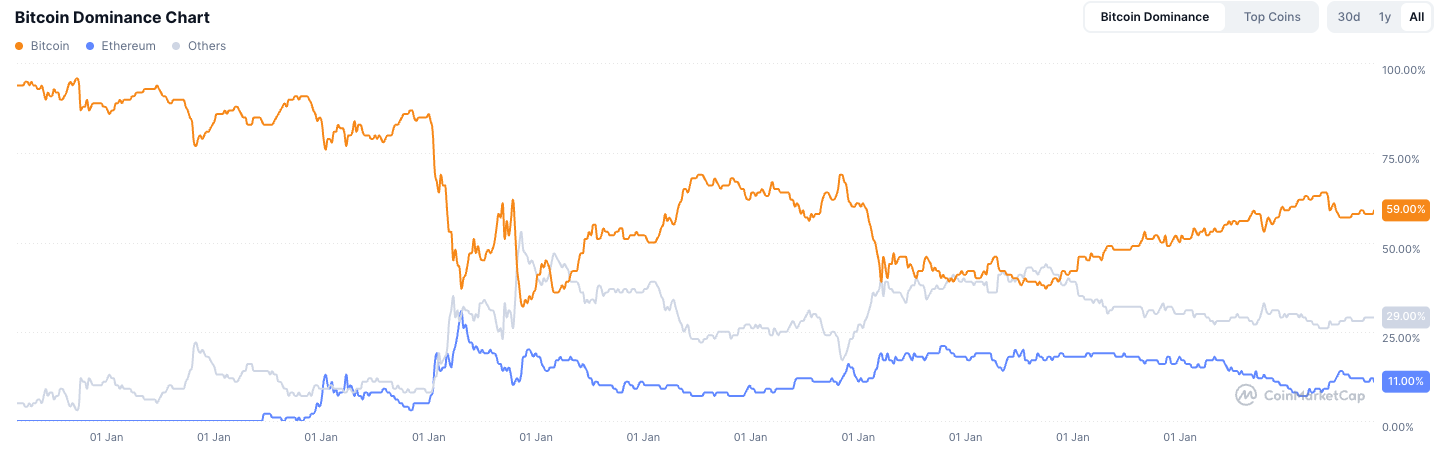
Key Differences: Bitcoin vs Crypto
The differences between Bitcoin and crypto run deeper than most investors realize. These distinctions matter for risk assessment and capital allocation.
Proof-of-Work vs Proof-of-Stake
This is the most important technical distinction. Bitcoin uses Proof-of-Work. Miners deploy physical hardware to secure the network. They expend real energy to validate transactions and produce new blocks. This creates a tangible cost that attackers must overcome.
Many newer cryptocurrencies use Proof-of-Stake. Validators lock up tokens as collateral instead of expending energy. No specialized hardware required. No electricity costs to bear. This makes Proof-of-Stake networks cheaper to operate. It also removes the physical anchor that secures Bitcoin.
The Proof-of-Work vs Proof-of-Stake difference has profound implications. Bitcoin's security comes from thermodynamic reality. You cannot fake energy expenditure. Proof-of-Stake security comes from economic incentives. The two models produce different risk profiles and investment characteristics.
Money vs Technology
Bitcoin is money. The protocol exists to be a store of value and medium of exchange. Development moves slow because stability matters more than features. Changes to the code require broad consensus across a decentralized network of participants.
Most altcoins are technology bets. You invest in teams building products. These projects ship new features fast. They pivot when markets shift. They compete for developer attention and user adoption. Success depends on execution and market timing.
This distinction shapes how you analyze each investment. Bitcoin analysis looks like macro investing. You study monetary policy and global capital flows. Altcoin analysis looks like venture capital. You study teams and product-market fit and competitive dynamics.
Supply Policy
Bitcoin has a hard cap of 21 million coins. The issuance rate halves every four years through events called halvings. This schedule runs on code that no one controls. The monetary policy is the most predictable in human history.
Other cryptocurrencies have varying supply policies. Some have unlimited inflation. Others burn tokens to reduce supply. Many change their monetary policy through governance votes. This flexibility creates uncertainty that Bitcoin avoids by design.
Track Record and Network Effect
Bitcoin has the longest track record in the crypto market. The network has operated since 2009 without a single hour of downtime. Institutional investors treat Bitcoin as the gateway asset to digital currencies. ETFs in the United States hold substantial Bitcoin positions.
Altcoins carry more execution risk. Projects fail. Teams abandon development. Competitors emerge with better technology. The mining vs buying analysis helps frame these different risk profiles.
Why Investors Care About the Crypto and Bitcoin Difference
The difference between crypto and Bitcoin isn’t just a technical one. It shapes your entire investment approach. Each asset class demands different analysis frameworks, demanding differing ways of allocating capital and assessing risk. It might help to think of it this way: all Bitcoin is crypto, but not all crypto is Bitcoin.
Bitcoin functions as a macro bet. You own Bitcoin to hedge against currency debasement and financial system fragility. The investment thesis rests on adoption as a global reserve asset. Price volatility exists in the short term. The long-term case depends on monetary properties and the store of value thesis.
Altcoin investments work like venture capital. You bet on specific teams building specific products. Most projects fail. A few generate enormous returns. Success requires deep research into technology and market fit. The risk profile differs from Bitcoin in kind rather than degree.
What can go wrong: Investors treat all crypto assets as interchangeable. They buy altcoins expecting Bitcoin-like returns without Bitcoin-like fundamentals. When bear markets arrive, weak projects collapse. Capital flows back to Bitcoin as a safe haven within the crypto ecosystem.
Mitigation: Separate your Bitcoin allocation from your altcoin speculation. Treat Bitcoin as a long-term savings vehicle. Treat altcoins as high-risk bets with strict position sizing.
Decision Framework: Choosing Your Exposure
Use these questions to guide your allocation:
Do you want monetary exposure or technology exposure? If you seek an alternative to fiat currency and a store of value, Bitcoin serves this purpose. If you want exposure to blockchain innovation and decentralized applications, altcoins provide that exposure.
What is your time horizon? Long-term holders benefit from Bitcoin's stability and track record, and the ten-year returns record shows what that has meant at different entry points. Short-term traders may find opportunities in altcoin volatility. Match your asset selection to your holding period.
How much research capacity do you have? Bitcoin requires less ongoing due diligence. The protocol changes slow. Altcoin investing demands constant monitoring of project updates and competitive dynamics. Be honest about your bandwidth.
What is your risk tolerance? Bitcoin has volatility but also has institutional support and regulatory clarity. Altcoins carry additional risks including rug pulls and regulatory uncertainty. Size positions according to your ability to absorb losses.
Bitcoin Mining: The Physical Infrastructure Difference
One difference deserves special attention for investors considering the bitcoin vs crypto question. Bitcoin requires physical mining infrastructure. You cannot produce new Bitcoin without specialized hardware and electricity. This creates an investment opportunity beyond buying coins on an exchange.
Because Bitcoin uses Proof-of-Work, miners must deploy real machines in real facilities. They pay real electricity bills. They maintain real equipment. This physical layer creates barriers to entry that do not exist in Proof-of-Stake networks.
For investors, this creates a strategic option. You can buy Bitcoin on an exchange at the spot price. Or you can acquire mining hardware and produce Bitcoin at your electricity cost. Mining offers potential tax advantages through equipment depreciation. It also provides exposure to the operational side of the Bitcoin network.
Most altcoins do not offer this option. Proof-of-Stake networks select validators based on token holdings. No specialized hardware needed. No energy expenditure required. The absence of mining removes one entire investment strategy from the altcoin playbook.
The Simple Mining Angle
If you’re wondering, “How does Bitcoin work?” in real-world terms, Simple Mining can help. We make Bitcoin mining accessible to investors who want hardware exposure without operational complexity. We host over 20,000 machines across U.S. facilities with a 65% renewable energy mix.
On-site repairs: The Cedar Falls facility operates North America's largest ASIC repair center. Equipment stays online instead of shipping across the country for service. This minimizes downtime and protects your hash rate.
Precision billing: Simple Mining bills based on actual power consumption rather than nameplate ratings. You pay for what your machine draws. This transparency protects against inflated electricity charges.
Turnkey operations: Plug in your miner and start earning Bitcoin. Simple Mining handles firmware updates and pool configuration. You focus on accumulation while professionals manage operations.
7-day free trial: Test the hosting experience before committing capital. Run your machine for a week. Verify uptime and payouts. Make an informed decision based on real results.
The distinction between Bitcoin and crypto matters most when you understand how Bitcoin works at the infrastructure level. Mining is not a technical curiosity. It represents a differentiated way to accumulate Bitcoin with potential operational and tax advantages. Explore our Bitcoin hosting options to participate in the physical infrastructure that secures the network.
FAQs
Can you mine 1 Bitcoin in a day?
Not with a home setup. Capturing a full coin in 24 hours takes a meaningful share of global hashrate, so only an operation running hundreds or thousands of machines reaches 1 BTC in a day. Individual miners earn fractions of a BTC daily based on hashrate and network difficulty.
How long does it take to mine 1 full Bitcoin?
At June 2026 conditions, one top-tier ASIC takes about 9 years, a mid-tier unit about 20 years, and an older unit close to 38 years, with rising difficulty stretching those numbers over time. A pool pays the same expected output in steady fractions instead of one rare block. We break down how long it takes to mine 1 Bitcoin by hardware tier and fleet size.
Can I mine 1 Bitcoin a month?
Only at scale. Ten top-tier ASICs take roughly 11 months to reach a full coin, so a one-month target means a large fleet, not a handful. Difficulty and uptime move the number.
How difficult is it to mine Bitcoin?
Mining is both technically and logistically complex. You need ASICs, access to affordable electricity, and reliable uptime. That's why many investors opt for hosted mining to simplify operations.
Is mining Bitcoin illegal?
Not in the U.S. However, laws vary by country. Bitcoin mining is legal in most jurisdictions but may face restrictions related to energy use or zoning. Always check local regulations.
Conclusion
Bitcoin is the protocol. Crypto is the category. The difference between crypto and Bitcoin determines your investment framework and your risk exposure. Know the distinction before you allocate capital.
Ready to participate in Bitcoin's physical infrastructure? Shop our Bitcoin hosting options to start mining with institutional-grade operations.