Key Takeaways
- The S21 XP delivers 270 TH/s at 13.5 J/TH, making it one of the most efficient air-cooled Bitcoin miners available.
- Electricity rate is the single largest variable: the gap between $0.06 and $0.12/kWh costs over $1,900 per year on one machine.
- Infrastructure demands (240V/20A circuit, 76 dB noise, 3,645W heat output) make hosted mining the practical choice for most buyers.
- Break-even math requires conservative difficulty growth assumptions, not static projections based on today's revenue.
- The S21 XP optimizes for long-term operating cost per terahash, while the S21+ offers a lower upfront price point for capital-conscious buyers.
The Bitmain Antminer S21 XP delivers 270 TH/s of SHA-256 hashrate at 13.5 J/TH efficiency. For Bitcoin miners comparing hardware options, those two numbers determine whether this machine earns its rack space. Every watt saved per terahash compounds into real margin over the life of the unit.
The question isn't whether the S21 XP performs. It does. The question is whether the math works at your electricity rate, your purchase price, and your infrastructure setup. This breakdown covers each variable so you can model the decision with real numbers.
What Is the Antminer S21 XP?
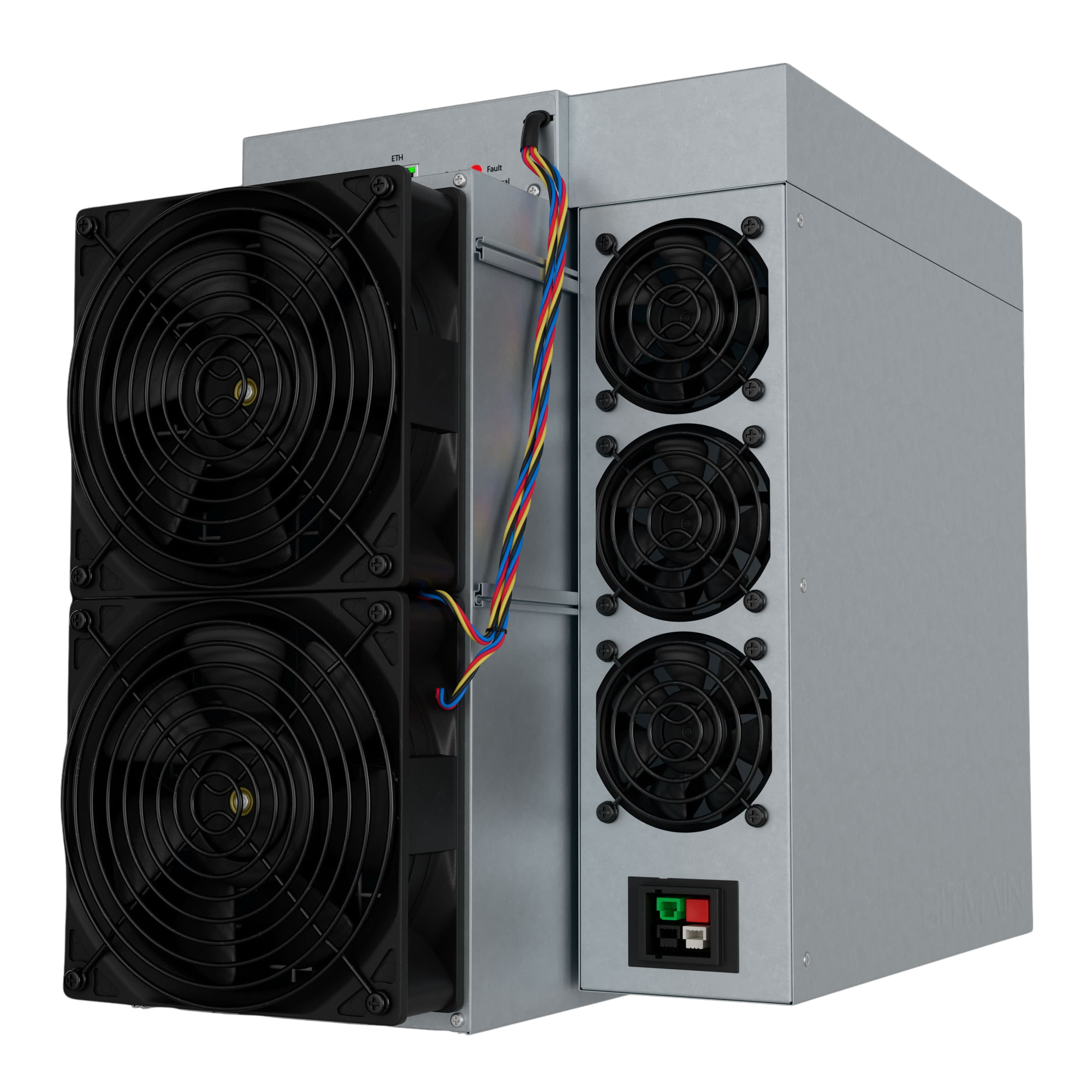
The Antminer S21 XP is Bitmain's 270 TH/s air-cooled Bitcoin miner with 13.5 J/TH efficiency, targeting operators who need strong hashrate density without specialized cooling infrastructure. Bitmain released it in October 2024 as the top-tier air-cooled model in the S21 family. It uses the SHA-256 algorithm and consumes 3,645W at 25 degrees C ambient temperature.
The 13.5 J/TH rating marks a meaningful jump from previous generations. The S19 XP Pro ran at 21.5 J/TH. That gap translates to 37% less electricity per terahash, which compounds into thousands of dollars over a machine's operating life.
Core Specifications at a Glance
| Spec | Value |
|---|---|
| Hashrate | 270 TH/s (plus or minus 3%) |
| Power Consumption | 3,645W (plus or minus 5%) |
| Efficiency | 13.5 J/TH |
| Algorithm | SHA-256 |
| Noise Level | 75-76 dB |
| Operating Temperature | 5-45 degrees C |
| Cooling | Air-cooled (4 fans) |
| Variants | Air, Immersion (300 TH/s), Hyd (473 TH/s) |
Operator reality: The 3% hashrate tolerance means actual output ranges from 262 to 278 TH/s. Build your projections around 265 TH/s, not the 270 TH/s headline. Conservative assumptions protect capital.
How Profitable Is the Antminer S21 XP?
Profitability depends on your electricity rate, and the math is straightforward: daily revenue minus daily power cost (3.645 kW x 24h x your rate) equals your margin. Revenue shifts with Bitcoin price, network difficulty, and hashprice <!-- internal link: what-is-hashprice -->. Power cost is the one variable you control.
Use the Simple Mining Bitcoin Mining Calculator model scenarios with live data. Static numbers go stale within weeks. Live calculators use current difficulty and Bitcoin price to show what the machine earns today.
Electricity Rate vs Daily Profit
The table below shows daily electricity cost at common rates. Subtract this from current daily revenue to find your margin.
| Electricity Rate | Daily Power Cost | Monthly Power Cost |
|---|---|---|
| $0.06/kWh | $5.25 | $157.50 |
| $0.07/kWh | $6.12 | $183.60 |
| $0.08/kWh | $7.00 | $210.00 |
| $0.10/kWh | $8.75 | $262.50 |
| $0.12/kWh | $10.50 | $315.00 |
Formula: Daily electricity cost = 3.645 kW x 24 hours x your $/kWh rate
The gap between $0.06 and $0.12/kWh is $5.25 per day. That's over $1,900 per year on a single machine. At fleet scale, the difference determines whether an operation survives difficulty increases or shuts down.
Operator reality: Pool fees add 1-2% on top. Infrastructure overhead (internet, cooling maintenance, facility costs) adds another 5-15% to operating expenses. A bitcoin mining profit calculator that only accounts for electricity will overstate your margins.
What Power and Infrastructure Does the S21 XP Need?
The S21 XP draws 3,645W continuously and requires a dedicated 240V circuit with at least a 20A breaker. Monthly consumption reaches 2,624 kWh when running nonstop. Most residential electrical panels need an upgrade to support this load without tripping breakers or creating fire risk.
The 5% power tolerance means actual wall draw can reach 3,827W. This is where precision billing matters: hosts that bill at nameplate power (3,645W) rather than wall draw provide a built-in discount of roughly 5%.
Noise and Heat Reality
The S21 XP generates 75-76 dB during operation. That's louder than a running vacuum cleaner, and it never stops. Nearly every watt of input power converts to heat output. At 3,645W, the machine produces approximately 12,400 BTU/h.
Residential setups face three barriers: noise complaints, dedicated electrical circuits, and heat exhaust routing. Garages and outbuildings can work with modifications. Living spaces cannot. If your setup can't handle the noise or heat, hosted Bitcoin mining removes these obstacles entirely.
How Long Does It Take to Break Even on the S21 XP?
Break-even depends on purchase price divided by daily net profit, with most hosted operators targeting 12-18 months under favorable conditions. The formula is simple:
Break-Even Days = Purchase Price / Daily Net Profit
Run three scenarios before committing capital. Model stable conditions, 3% monthly difficulty growth, and 5% monthly difficulty growth. If your conservative scenario still shows break-even inside 24 months, the investment has margin for error.
What kills ROI projections: buyers model today's revenue as a constant. Network difficulty adjusts every 2,016 blocks. When hashrate grows faster than Bitcoin price, your share of block rewards shrinks. Factor in difficulty growth or your projections will mislead you. Review the full profitability analysis for a deeper look at what drives mining economics.
Operator reality: Downtime matters too. A machine sitting in a repair queue for two weeks loses revenue for all 14 days. Hosts with on-site repair centers cut turnaround from weeks to days, protecting your break-even timeline.
Is the S21 XP Better Than the S21 Pro or S21+?
The S21 XP wins on efficiency (13.5 J/TH vs 15 J/TH for the S21 Pro and 16.4-16.7 J/TH for the S21+) but costs more upfront. The right choice depends on your optimization target.
| Model | Hashrate | Efficiency | Power Draw |
|---|---|---|---|
| S21 XP | 270 TH/s | 13.5 J/TH | 3,645W |
| S21 Pro | 234-245 TH/s | 15 J/TH | 3,675W |
| S21+ | 216-235 TH/s | 16.4-16.7 J/TH | 3,564-3,850W |
The S21+ carries a lower upfront price tag, which appeals to buyers prioritizing capital efficiency. The S21 XP packs more hashrate per watt, which matters for operators running under fixed power capacity or planning 2+ year deployment windows. See the full Bitcoin mining hardware comparison for detailed analysis across all current-gen models.
Fleet operators think in $/TH (cost per terahash purchased) and J/TH (ongoing operating cost per terahash). Lower $/TH reduces capital exposure. Lower J/TH reduces daily operating cost. The S21 XP optimizes for the second metric.
Should You Host or Home-Mine the S21 XP?
Most S21 XP buyers should host because the machine's 76 dB noise, 3,645W power draw, and continuous heat output exceed what standard residential setups can handle. Hosting also solves the electricity rate problem. Residential rates average $0.16/kWh in the US. Hosted operations access institutional rates between $0.07-$0.08/kWh, which is the difference between profitable mining and an expensive space heater.
Hosting adds repair infrastructure too. Hashboard failures, fan errors, and thermal faults happen on every ASIC eventually. An operator with an on-site repair center returns machines to service in days. Home miners ship machines out for weeks.
Before buying any ASIC, review the hardware buyer's checklist to verify authenticity, compare suppliers, and confirm hosting availability.
FAQs
What hashrate does the Antminer S21 XP deliver?
The S21 XP delivers 270 TH/s with a plus or minus 3% tolerance. Real-world output ranges from 262 to 278 TH/s depending on ambient temperature and firmware configuration.
Can I run an S21 XP at home?
Home mining is possible with a dedicated 240V/20A circuit, proper ventilation, and noise isolation. Most residential environments cannot support the 76 dB fan noise and 3,645W continuous power draw without major modifications.
What electricity rate makes the S21 XP profitable?
Rates below $0.08/kWh keep the S21 XP profitable under most market conditions. Above $0.10/kWh, margins compress to where difficulty increases can eliminate profits. Use a live profitability calculator to check current thresholds.
Does the S21 XP come with a warranty?
Bitmain provides a 365-day manufacturer warranty. Miners purchased through Simple Mining receive 12 months of free repairs, covering labor and parts for common failures.
How does the S21 XP compare to hydro-cooled models?
The S21 XP Hyd variant delivers 473 TH/s at 12 J/TH using liquid cooling. It produces less noise (approximately 50 dB) and runs cooler. The trade-off: hydro requires pumps, radiators, and specialized plumbing infrastructure that air-cooled units avoid.
The Efficiency Threshold
In Bitcoin mining, the machine that survives is the one with the lowest cost per terahash. The S21 XP at 13.5 J/TH earns its place in any fleet where electricity rates sit at or below $0.08/kWh and the operator has infrastructure to match.
Schedule a call with Simple Mining to model S21 XP profitability at hosted rates and get hashing within 7-14 days.
By Josh Heine, Content Strategist at Simple Mining
Published: April 10, 2026