Mining hardware is always changing. You can't define mining by the box it comes in — only by the work it does. Let us show you.
ASIC Era Efficiency
Bitcoin mining hardware has moved from thousands of joules per terahash to modern hydro miners near 10 J/TH. Lower J/TH means more hashrate per watt, which directly improves hosting economics and miner survivability.
Simple Mining
Current listed miners
Orange dots show current Simple Mining shop models.
How to read it
The y-axis is logarithmic because early ASICs were orders of magnitude less efficient than today's hardware.
Why it matters
Efficiency is the link between hashrate and power cost. At the same electricity rate, lower J/TH gives a miner more hashpower for each dollar of energy.
Shop context
Current Simple Mining-listed points are pulled from the same spec values used on the shop pages.
Representative manufacturer-listed SHA-256 ASIC specs, rounded. J/TH and W/TH are equivalent when hashrate is expressed in TH/s.
Compare current Bitcoin minersIt all started with ordinary CPUs. Satoshi Nakamoto mined the genesis block on a basic desktop. Early adopters ran Bitcoin's mining software on their laptops and personal computers — no special equipment needed.
Miners discovered that graphics cards could process parallel computations far faster than CPUs. GPU rigs — sometimes stacking 6+ cards on open-air frames — became the standard. Garages and basements turned into mining farms overnight.
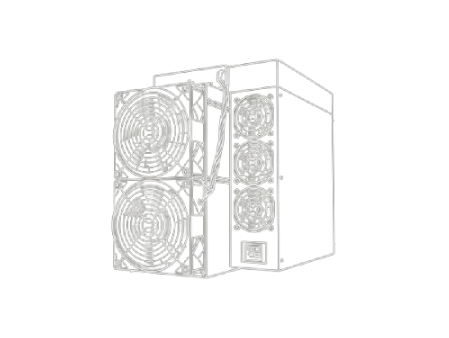
Application-Specific Integrated Circuits changed the game entirely. Built to do one thing — mine SHA-256 — these purpose-built machines made GPUs obsolete for Bitcoin mining almost overnight. Air-cooled ASICs are the industry standard today.
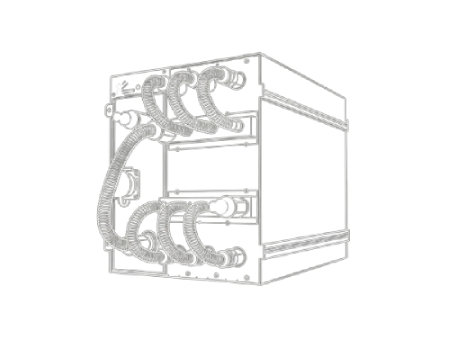
As chip density increased, liquid cooling entered the picture. "Shoebox" form-factor hydro miners pack serious hashrate into a compact, fanless enclosure. Water flows across the boards, removing heat far more efficiently than air — and nearly silent.
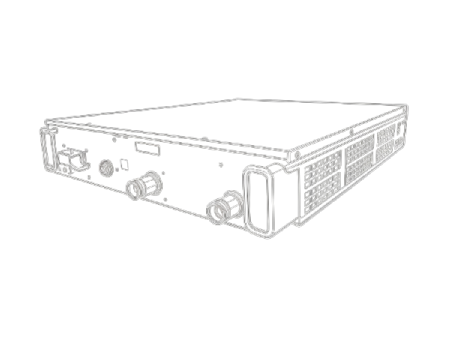
The latest evolution: data-center-grade 2U rack-mount hydro miners. These slide into standard server racks and connect to centralized liquid cooling loops. They enable extreme density — stacking massive hashrate in minimal space with enterprise-grade reliability.
From laptops to servers, the hardware is always changing. What stays constant is the mission: securing the Bitcoin network and making mining accessible to everyone. That's what Simple Mining does — wherever the technology goes next.
